Understanding the Different Types of Massage Styles
Massage therapy has long been recognized as a powerful tool for improving physical health, relieving stress, and promoting overall wellness. However, many people are unaware of just how many massage techniques exist and how each one serves a different purpose. Understanding the different types of massage styles can help you choose the treatment that best fits your health goals, whether you are seeking relaxation, pain relief, or improved mobility.
Today, massage therapy is commonly integrated with holistic healthcare approaches, including chiropractic care and rehabilitation. Clinics such as Custom Chiropractor often recommend massage therapy alongside spinal adjustments to support recovery and improve musculoskeletal health.
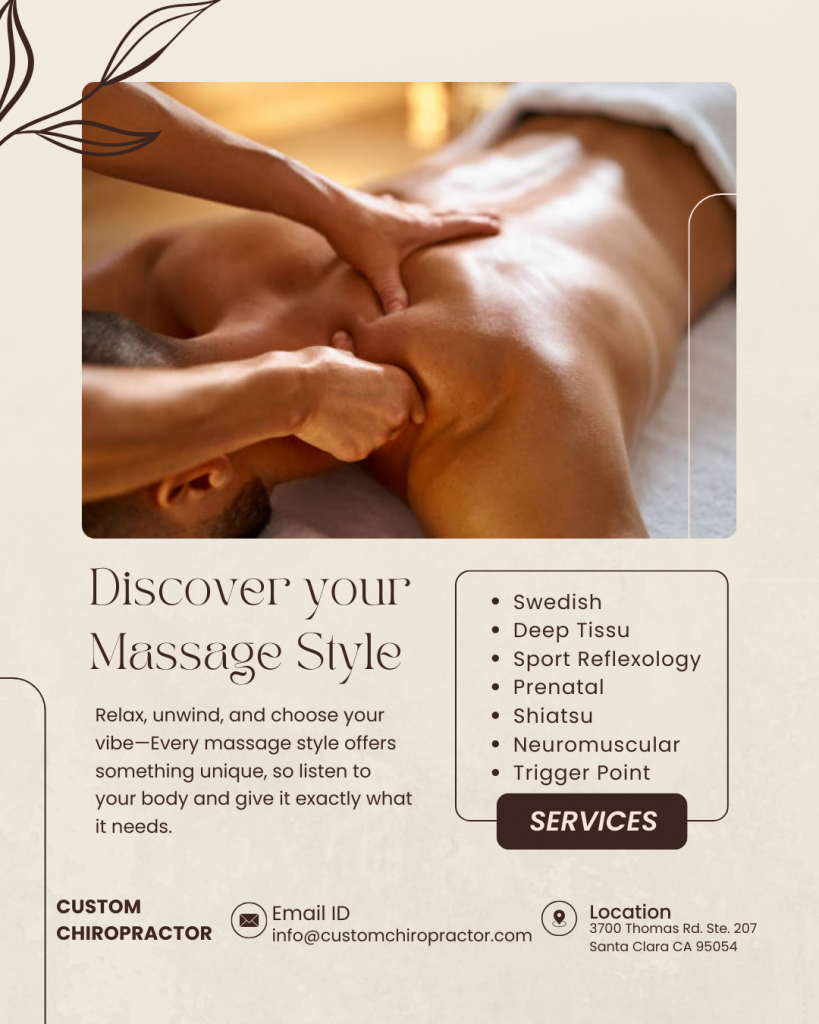
In this guide, we will focus on the different types of massage styles, including prenatal, deep tissue, swedish, sports massage, reflexology, shiatsu, neuromuscular therapy, and trigger point therapy. Each of these approaches offers unique benefits depending on your needs.
Why Understanding the Different Types of Massage Styles Matters
Before scheduling a massage appointment, it is important to know what each therapy focuses on. Understanding the different types of massage styles allows patients to select treatments that target their specific concerns, such as muscle tension, injury recovery, or stress reduction.
For example, someone experiencing chronic back pain may benefit more from deep tissue or neuromuscular therapy, while a person seeking relaxation may prefer Swedish massage. According to the National Institutes of Health, massage therapy can significantly reduce stress, improve circulation, and enhance overall well-being.
Because of these benefits, healthcare providers increasingly emphasize understanding the different types of massage styles as part of a comprehensive wellness strategy.
Swedish Massage: The Foundation of Relaxation
One of the most well-known techniques is Swedish massage. This style focuses on gentle, flowing strokes that improve circulation and promote relaxation throughout the body.
Swedish massage typically includes long gliding strokes, kneading, and light tapping movements. These techniques help reduce muscle tension and improve blood flow without applying deep pressure.
For individuals new to massage therapy, Swedish massage is often the ideal starting point. It provides a calming experience while still offering physical benefits. This example highlights why understanding the types of massage styles helps patients choose the most comfortable option.
You can learn more about Swedish massage techniques from resources like Healthline’s Swedish massage guide.
Deep Tissue Massage for Chronic Muscle Tension
Deep tissue massage focuses on deeper layers of muscle and connective tissue. Unlike Swedish massage, this technique uses slower strokes and firmer pressure to target chronic muscle tightness.
Therapists often recommend deep tissue massage for individuals experiencing persistent pain, stiffness, or postural imbalances. For example, people who spend long hours sitting at a desk may develop tension in the neck and lower back.
Many patients combine massage therapy with chiropractic treatments to improve mobility and relieve discomfort. Services such as back pain treatment often incorporate soft tissue work to support spinal health.
Prenatal Massage for Expecting Mothers
Prenatal massage is specifically designed for pregnant women. During pregnancy, the body undergoes significant changes that can create discomfort in the lower back, hips, and legs.
Prenatal massage uses gentle techniques to relieve tension, improve circulation, and reduce swelling. Special positioning and cushions ensure the comfort and safety of both mother and baby.
Research suggests that prenatal massage may also help reduce anxiety and improve sleep quality during pregnancy. Because of these benefits, many healthcare providers recommend it as part of a prenatal wellness routine.
Sports Massage for Active Lifestyles
Sports massage is designed specifically for athletes and physically active individuals. This technique focuses on preventing injuries, improving flexibility, and enhancing athletic performance.
Unlike relaxation-focused massage styles, sports massage targets muscle groups that are frequently used during physical activity. Therapists may apply stretching techniques, compression, and deep pressure to improve muscle function.
Athletes often combine sports massage with chiropractic care to maintain proper alignment and reduce strain on joints and muscles. Many clinics offering chiropractic care also encourage massage therapy for injury prevention.
Shiatsu Massage and Energy Balance
Shiatsu massage originated in Japan and is based on principles similar to acupuncture. Instead of needles, therapists apply rhythmic pressure using their fingers, palms, and thumbs along specific energy pathways known as meridians.
The goal of shiatsu is to restore balance within the body and improve the flow of energy, often referred to as “Qi.” Many people report feeling both relaxed and energized after a session.
Neuromuscular Therapy for Pain Relief
Neuromuscular therapy is a highly specialized form of massage designed to treat chronic pain and muscular dysfunction. It focuses on identifying trigger points and areas of nerve compression within the muscles.
Therapists apply targeted pressure to relieve pain and restore normal muscle function. This approach is often recommended for individuals dealing with conditions such as sciatica, tension headaches, or repetitive strain injuries.
When combined with chiropractic adjustments and corrective exercises, neuromuscular therapy can significantly improve mobility and reduce discomfort.
Trigger Point Therapy for Muscle Knots
Trigger point therapy focuses on tight areas within muscle fibers commonly referred to as “knots.” These knots can cause pain both locally and in other areas of the body, a phenomenon known as referred pain.
During trigger point therapy, the therapist applies concentrated pressure to these areas until the tension releases. Although the pressure may feel intense at times, the results often include significant relief and improved range of motion.
For individuals experiencing chronic muscle tension, trigger point therapy can be an effective complement to chiropractic care and rehabilitation.
Final Thoughts
Massage therapy offers a wide range of techniques designed to support relaxation, pain relief, and physical performance. From Swedish massage and prenatal care to sports massage and neuromuscular therapy, each approach serves a unique purpose.
By understanding the different types of massage styles, individuals can make informed decisions about which therapy best supports their wellness goals. Whether you are seeking stress relief, improved mobility, or recovery from muscle tension, choosing the right massage technique can make a meaningful difference.
When combined with other holistic treatments such as chiropractic care, massage therapy can play an important role in maintaining long-term musculoskeletal health and overall well-being.