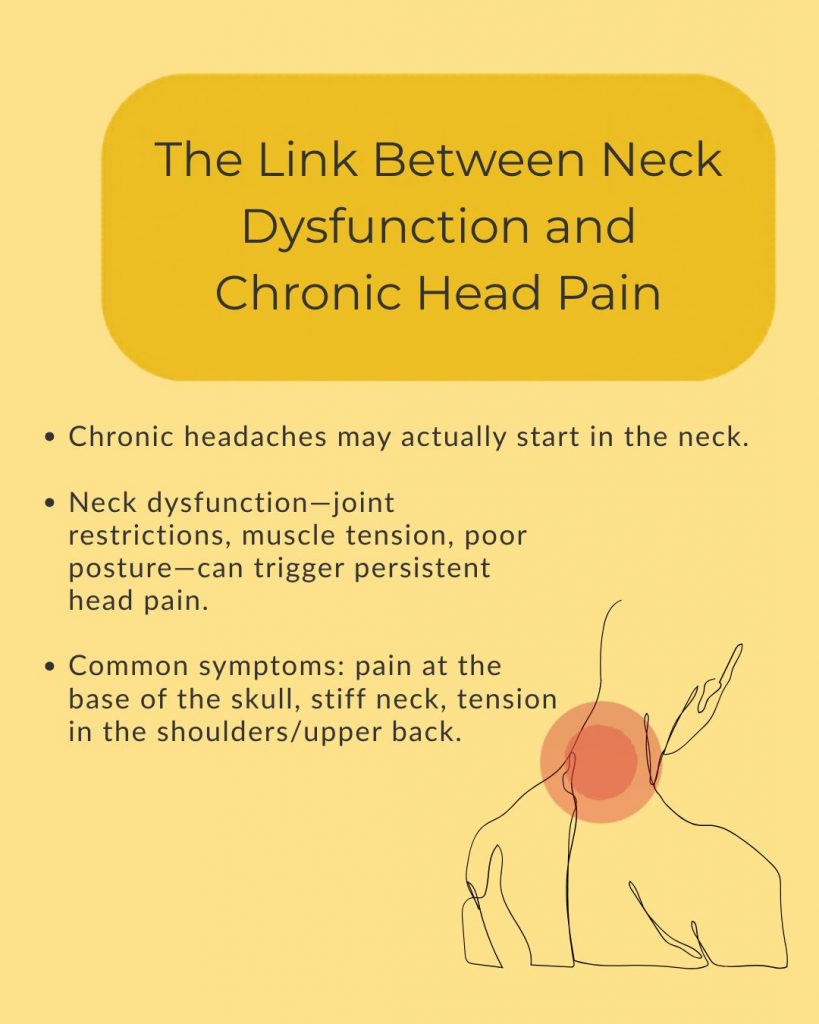
The Link Between Neck Dysfunction and Chronic Head Pain
Chronic head pain affects millions of people each year, often interfering with daily life, productivity, and overall well-being. While many individuals assume headaches originate solely in the brain, research increasingly highlights the link between neck dysfunction and chronic head pain as a critical and often overlooked factor. In fact, structural and muscular issues in the cervical spine can play a major role in persistent headaches.
Understanding the link between neck dysfunction and chronic head pain is essential for identifying effective, non-invasive treatment options. In this article, we will explore the causes, symptoms, and evidence-based therapies that can help address this condition at its source.
What Is Neck Dysfunction?
Neck dysfunction refers to abnormalities in the cervical spine, including joint restrictions, muscle imbalances, ligament strain, or nerve irritation. These issues can develop gradually due to poor posture, repetitive movements, or injury. Over time, they may contribute to pain patterns that extend beyond the neck itself.
For example, individuals who spend long hours working at a computer often develop forward head posture. Consequently, this places excessive strain on the neck muscles and joints, reinforcing the link between neck dysfunction and chronic head pain.
How Neck Dysfunction Triggers Chronic Head Pain
The cervical spine is closely connected to the nervous system. Specifically, nerves in the upper neck communicate with regions of the brain responsible for processing pain. When dysfunction occurs, these nerves can become irritated or compressed.
As a result, pain signals may be referred to the head, leading to tension headaches or cervicogenic headaches. This neurological connection clearly demonstrates the link between neck dysfunction and chronic head pain, especially in patients who experience recurring discomfort without a clear neurological diagnosis.
According to research published by the National Center for Biotechnology Information (NCBI), cervical spine dysfunction is a common contributor to chronic headache disorders, particularly those originating from musculoskeletal causes.
Common Symptoms to Watch For
Recognizing symptoms early can help prevent long-term complications. Although headache patterns vary, several signs point toward the link between neck dysfunction and chronic head pain:
- Persistent pain at the base of the skull
- Headaches that worsen with neck movement
- Stiffness or reduced range of motion in the neck
- Pain radiating from the neck to the forehead or temples
- Muscle tightness in the shoulders and upper back
Furthermore, these symptoms often coexist, making it increasingly important to evaluate the cervical spine when diagnosing chronic headaches.
The Role of Poor Posture
Poor posture is one of the leading contributors to neck dysfunction. For instance, prolonged screen use encourages forward head positioning, which significantly increases mechanical stress on the cervical spine.
Over time, this stress reinforces the link between neck dysfunction and chronic head pain, as muscles become overworked and joints lose proper alignment. A study from Harvard Health Publishing highlights how posture-related strain can lead to chronic musculoskeletal pain, including headaches.
Chiropractic Care as a Treatment Option
Chiropractic care focuses on restoring proper alignment and function to the spine. Through targeted adjustments, chiropractors aim to reduce joint restrictions and improve nervous system communication.
This approach directly addresses the link between neck dysfunction and chronic head pain by targeting the root cause rather than masking symptoms. Many patients report reduced headache frequency and intensity after consistent care.
To learn more about spinal alignment and its benefits, visit Custom Chiropractor’s chiropractic care page.
Massage Therapy and Muscle Relief
In addition to chiropractic adjustments, massage therapy plays a vital role in addressing muscular components of neck dysfunction. Tight muscles, trigger points, and fascial restrictions can all contribute to referred head pain.
By releasing tension and improving circulation, massage therapy further supports recovery and helps break the link between neck dysfunction and chronic head pain. This combined approach often produces more sustainable results than isolated treatments.
Explore therapeutic options at Custom Chiropractor’s massage therapy services.
Exercise and Rehabilitation
Corrective exercises are essential for long-term relief. Strengthening weak muscles and improving posture can prevent recurring dysfunction. Additionally, mobility exercises help restore proper movement patterns in the cervical spine.
When combined with professional care, rehabilitation programs can significantly reduce the link between neck dysfunction and chronic head pain by addressing both structural and functional issues.
When to Seek Professional Help
While occasional headaches are common, persistent or worsening symptoms should not be ignored. If you experience frequent headaches accompanied by neck stiffness or pain, it may be time to consult a healthcare professional.
Early intervention is key. Addressing the link between neck dysfunction and chronic head pain sooner rather than later can prevent the condition from becoming more severe or difficult to treat.
You can schedule a consultation through Custom Chiropractor’s contact page to receive a personalized assessment.
Conclusion
In summary, the link between neck dysfunction and chronic head pain is both significant and well-supported by clinical evidence. Rather than treating headaches as isolated symptoms, it is crucial to consider the role of the cervical spine in overall health.
Through a combination of chiropractic care, massage therapy, and corrective exercise, patients can address the root causes of their discomfort. Ultimately, recognizing and treating the link between neck dysfunction and chronic head pain offers a pathway to lasting relief and improved quality of life.