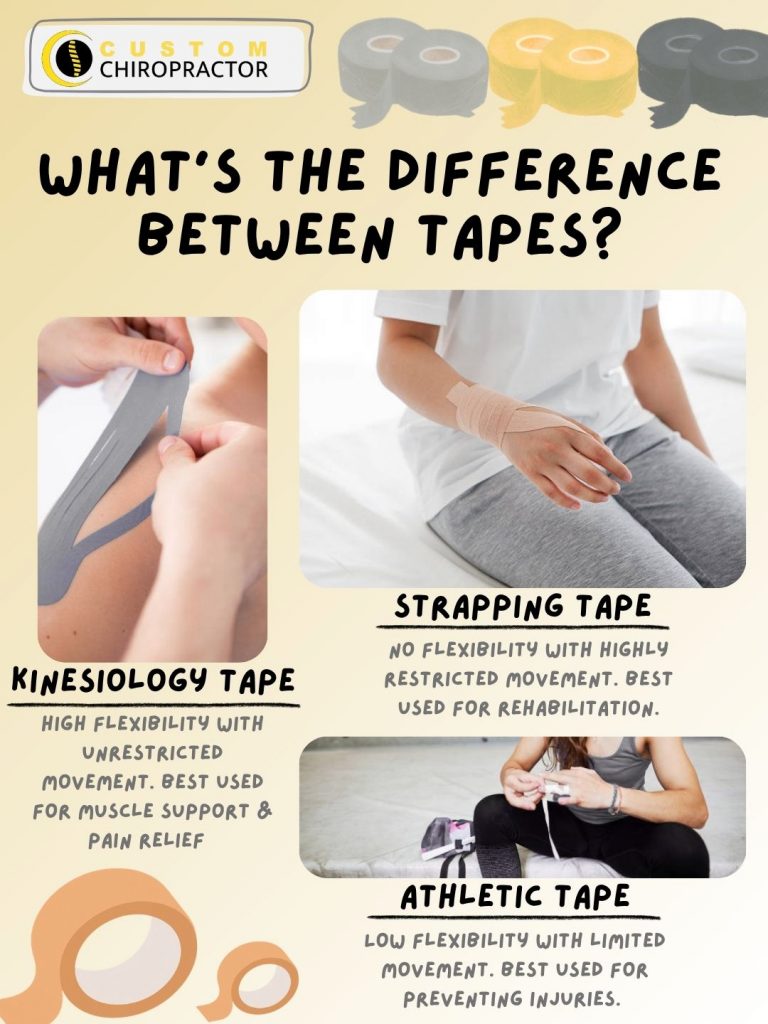
Kinesiology Tape vs Athletic Tape vs Strapping Tape: Which One Should You Use for Pain, Support, and Injury?
If you’ve ever dealt with muscle pain, a sports injury, or joint instability, you’ve likely come across different types of taping methods. However, understanding kinesiology tape vs athletic tape vs strapping tape can be confusing at first. Each option serves a different purpose, and choosing the wrong one may limit recovery or reduce effectiveness.
In this guide, we’ll clearly break down kinesiology tape vs athletic tape vs strapping tape so you can make an informed decision. Whether you’re an athlete, recovering from an injury, or simply trying to manage daily pain, this comparison will help you choose the right option.
Quick Overview of Kinesiology Tape vs Athletic Tape vs Strapping Tape
To begin with, here is a simple breakdown of kinesiology tape vs athletic tape vs strapping tape:
- Kinesiology Tape: Flexible support that allows movement and improves circulation
- Athletic Tape: Semi-rigid support that limits excessive motion
- Strapping Tape: Highly rigid support used for strong stabilization
Additionally, each type of tape is designed for a specific stage of injury management, which we will explore in detail below.
What Is Kinesiology Tape?
Kinesiology tape is an elastic therapeutic tape designed to support muscles while still allowing full movement. Unlike rigid taping methods, it works with the body rather than restricting it.
Because of this, kinesiology tape vs athletic tape vs strapping tape comparisons often highlight kinesiology tape as the most versatile option for everyday use.
Benefits of Kinesiology Tape
- Furthermore, it helps improve blood flow and lymphatic drainage
- In addition, it can reduce swelling and inflammation
- It supports muscles without limiting range of motion
- As a result, it may assist with posture and muscle activation
For example, kinesiology tape is often used for shoulder tension, lower back discomfort, and general muscle fatigue. You can learn more about related conditions on our
services page.
What Is Athletic Tape?
Athletic tape is a more rigid type of tape commonly used in sports settings. Unlike kinesiology tape, it is designed to restrict movement in order to protect joints from injury.
On the other hand, when comparing kinesiology tape vs athletic tape vs strapping tape, athletic tape sits in the middle in terms of support and mobility restriction.
Benefits of Athletic Tape
- Firstly, it provides joint stability during physical activity
- Additionally, it helps prevent excessive or unsafe movement
- It is commonly used to reduce injury risk in sports
- Therefore, it is popular among athletes before training or competition
For instance, athletic tape is frequently applied to ankles, wrists, and knees for added protection. If you’re interested in injury prevention strategies, visit our
sports injury prevention article.
What Is Strapping Tape?
Strapping tape is the most rigid of all taping methods. It is primarily used when maximum support and restriction are required, especially during rehabilitation.
In contrast to the other options in kinesiology tape vs athletic tape vs strapping tape, strapping tape is not designed for flexibility but rather for protection and stability.
Benefits of Strapping Tape
- To begin with, it offers maximum joint immobilization
- Furthermore, it supports ligament healing after injury
- It helps prevent further damage during recovery
- As a result, it is commonly used in rehab settings
For example, strapping tape is often used after ligament sprains or significant joint injuries. If you are dealing with ongoing pain or instability, you can reach out via our
contact page.
Key Differences: Kinesiology Tape vs Athletic Tape vs Strapping Tape
To make things clearer, here is a direct comparison of kinesiology tape vs athletic tape vs strapping tape:
| Feature | Kinesiology Tape | Athletic Tape | Strapping Tape |
|---|---|---|---|
| Flexibility | High | Low | None |
| Support Level | Light | Moderate | Strong |
| Movement | Unrestricted | Limited | Highly restricted |
| Best Use | Muscle support & pain relief | Injury prevention | Rehabilitation |
Overall, this comparison highlights how kinesiology tape vs athletic tape vs strapping tape differ significantly depending on the level of support needed.
Which Tape Should You Choose?
Now that you understand the differences, the next question is which option is best for you. Fortunately, the answer depends on your specific condition and activity level.
If you need muscle support and circulation:
Choose kinesiology tape, as it allows movement while supporting recovery.
If you want injury prevention during sports:
Athletic tape is more appropriate because it limits risky motion.
If you are recovering from a serious injury:
Strapping tape is the best option due to its strong stabilization properties.
In summary, choosing between kinesiology tape vs athletic tape vs strapping tape depends entirely on your goal: movement, prevention, or rehabilitation.
Common Mistakes When Using Tape
Even when people understand kinesiology tape vs athletic tape vs strapping tape, mistakes are still common. However, avoiding these errors can significantly improve results.
- For example, using kinesiology tape for full joint instability may not provide enough support
- Additionally, applying athletic tape too tightly can restrict circulation
- Furthermore, leaving tape on too long may irritate the skin
- On the other hand, incorrect placement can reduce effectiveness
Therefore, proper application is just as important as choosing the right type of tape.
When to See a Chiropractor
Although taping can be helpful, it does not replace professional care. In fact, kinesiology tape vs athletic tape vs strapping tape solutions work best when combined with proper assessment and treatment.
You should consider seeing a chiropractor if:
- Pain persists beyond a few days
- Injuries keep recurring
- Mobility becomes limited
- Symptoms are worsening over time
In these cases, addressing the root cause is essential rather than relying on tape alone.
Final Thoughts
To conclude, understanding kinesiology tape vs athletic tape vs strapping tape can significantly improve your recovery and performance outcomes. Each tape has a distinct role, and using the correct one ensures better support and faster healing.
Ultimately, whether you choose kinesiology tape, athletic tape, or strapping tape, the key is matching the tool to the problem. If you are unsure, professional guidance can make a major difference in your recovery journey.
To explore more or get personalized support, visit our
chiropractic services page.