Recovery Strategies for Runner’s Knee
Runner’s knee, also known as patellofemoral pain syndrome, is one of the most common injuries among runners and active individuals. Fortunately, with the right approach, recovery is not only possible but can also help prevent future issues. In this guide, we will explore effective Recovery Strategies for Runner’s Knee that promote healing, restore strength, and get you back on track safely.
Understanding Runner’s Knee
Before diving into treatment, it is important to understand what causes this condition. Runner’s knee typically results from overuse, improper alignment, or muscular imbalances. As a result, the cartilage under the kneecap becomes irritated, leading to pain, especially during activities like running, squatting, or climbing stairs.
Moreover, factors such as poor footwear, weak quadriceps, or tight hamstrings can contribute to the condition. Therefore, addressing the root cause is essential for effective Recovery Strategies for Runner’s Knee.
Rest and Activity Modification
First and foremost, rest plays a crucial role in recovery. Continuing to run through pain can worsen the condition. Instead, consider reducing mileage or temporarily switching to low-impact activities like swimming or cycling.
Additionally, gradual reintroduction of activity is key. You can learn more about safe rehabilitation techniques at customchiropractor.com/rehabilitation-techniques. This ensures that your knee heals properly without unnecessary strain.
Strengthening Exercises
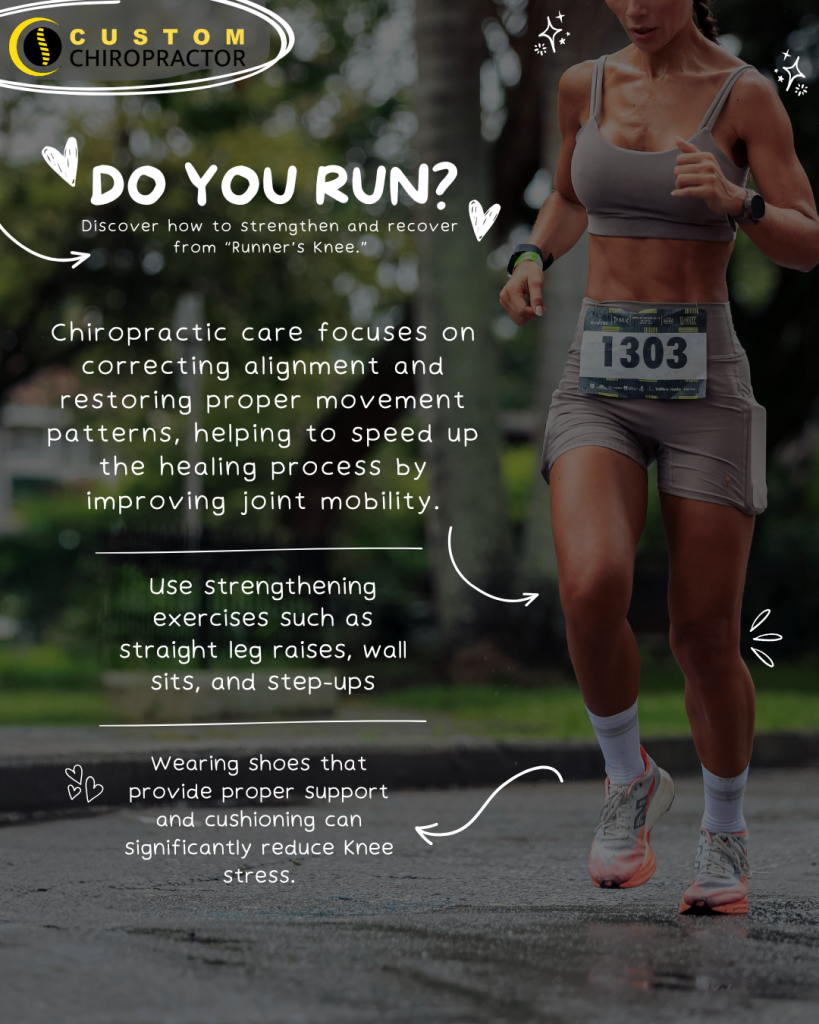
Equally important, strengthening the muscles around the knee helps stabilize the joint. Focus on exercises targeting the quadriceps, hamstrings, and glutes. For example, straight leg raises, wall sits, and step-ups are excellent choices.
Furthermore, consistent strength training improves alignment and reduces stress on the kneecap. According to research from the National Institutes of Health, targeted strengthening significantly improves recovery outcomes.
Clearly, incorporating these exercises is a cornerstone of effective Recovery Strategies for Runner’s Knee.
Stretching and Flexibility
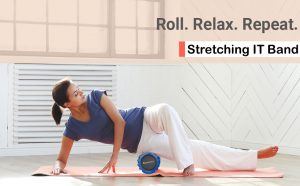
In addition to strengthening, flexibility is vital. Tight muscles can pull the kneecap out of alignment, increasing pain. Therefore, regular stretching of the quadriceps, hamstrings, calves, and iliotibial (IT) band is essential.
For guided stretching routines, visit customchiropractor.com/stretching-guides. These routines can help improve mobility and reduce tension around the knee.
Proper Footwear and Orthotics
Another critical factor in Recovery Strategies for Runner’s Knee is footwear. Wearing shoes that provide proper support and cushioning can significantly reduce knee stress. In some cases, custom orthotics may be necessary to correct alignment issues.
Additionally, replacing worn-out shoes regularly can prevent recurring pain. For more information on choosing the right footwear, check out this helpful guide from Runner’s World.
Manual Therapy and Chiropractic Care
Meanwhile, manual therapy can accelerate healing by improving joint mobility and reducing inflammation. Chiropractic care, in particular, focuses on correcting alignment and restoring proper movement patterns.
To explore personalized care options, visit customchiropractor.com/services. Professional guidance ensures that your recovery plan is tailored to your specific needs.
Notably, combining manual therapy with exercise enhances the effectiveness of Recovery Strategies for Runner’s Knee.
Ice and Anti-Inflammatory Techniques
At the same time, managing inflammation is essential. Applying ice to the affected area for 15–20 minutes several times a day can reduce swelling and pain. Compression and elevation may also provide additional relief.
In some cases, over-the-counter anti-inflammatory medications may be helpful. However, it is always best to consult a healthcare professional before starting any medication regimen.
Improving Running Form
Equally important, poor running mechanics can contribute to knee pain. Therefore, analyzing and improving your form is a valuable step. Shortening your stride, increasing cadence, and maintaining proper posture can reduce stress on the knees.
For detailed guidance, you can read this article from Healthline. Small adjustments can make a significant difference in your recovery journey.
Ultimately, refining your technique is a long-term component of Recovery Strategies for Runner’s Knee.
Gradual Return to Running
Once pain subsides, it is important to return to running gradually. Start with short distances and low intensity, then slowly increase your workload. Listening to your body is crucial during this phase.
Additionally, incorporating rest days into your routine helps prevent overuse. For personalized return-to-run plans, check out customchiropractor.com/injury-prevention.
Preventing Future Injuries
Finally, prevention should always be a priority. Maintaining strength, flexibility, and proper form can significantly reduce the risk of recurrence. Cross-training and varying your workouts also help distribute stress more evenly across your body.
Incorporating these habits ensures that your Recovery Strategies for Runner’s Knee lead to long-term success rather than temporary relief.
Conclusion
In conclusion, recovering from runner’s knee requires a comprehensive and consistent approach. From rest and strengthening to proper footwear and professional care, each element plays a vital role. By following these proven Recovery Strategies for Runner’s Knee, you can not only heal effectively but also return stronger and more resilient.
Remember, recovery is a journey. With patience, dedication, and the right strategies, you can overcome runner’s knee and continue pursuing your fitness goals with confidence.