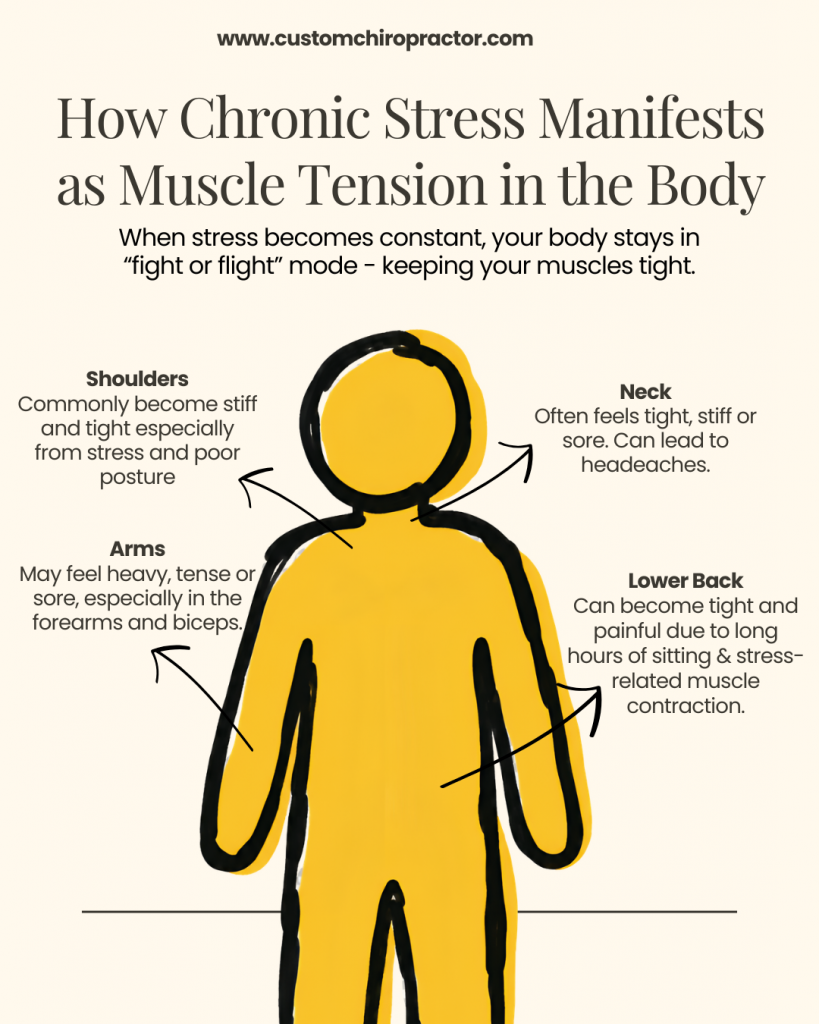
How Chronic Stress Manifests as Muscle Tension in the Body
Stress is a natural part of life, but when it becomes constant, its effects can extend far beyond mental and emotional well-being. Many people experience persistent neck stiffness, tight shoulders, back discomfort, or tension headaches without realizing that ongoing stress may be contributing to their symptoms. Understanding How Chronic Stress Manifests as Muscle Tension in the Body can help you recognize physical warning signs and take practical steps toward lasting relief.
Fortunately, a combination of stress management, healthy movement, improved posture, and appropriate professional care may help reduce discomfort. By learning how your nervous system responds to stress, you can better understand your body’s signals and develop healthier habits.
Understanding the Connection Between Stress and Muscle Tension
When you encounter a stressful situation, your body activates its natural fight-or-flight response. This process prepares you to respond to a perceived threat by increasing alertness, changing your breathing and heart rate, and tightening your muscles. Although this response is useful in the short term, problems may arise when the body remains on high alert for extended periods.
According to the National Center for Complementary and Integrative Health, stress triggers physical changes that include muscle tightening. Normally, muscles relax after a stressful event passes. However, prolonged stress can contribute to ongoing tension, headaches, sleep disturbances, and other physical symptoms.
Understanding How Chronic Stress Manifests as Muscle Tension in the Body begins with recognizing that mental and physical health are closely connected. Emotional strain can influence muscle activity, pain sensitivity, sleep quality, and everyday movement patterns.
Common Areas Where Stress-Related Muscle Tension Develops
1. Neck and Shoulder Tightness
The neck and shoulders are common areas where stress-related tension becomes noticeable. During demanding situations, people may unconsciously raise their shoulders, tighten their jaw, or hold their head in a rigid position. Over time, these habits can contribute to stiffness, soreness, and reduced comfort during daily activities.
Additionally, prolonged computer use and poor workstation ergonomics may compound the problem. When stress and sustained postures occur together, the surrounding muscles may feel increasingly fatigued.
2. Upper and Lower Back Discomfort
Stress may also contribute to back discomfort. When people feel overwhelmed, they sometimes brace their abdominal and back muscles without noticing. Combined with prolonged sitting, limited movement, or inadequate recovery, this pattern can make ordinary activities feel more uncomfortable.
However, back pain has many potential causes. Although stress can contribute to symptoms, persistent discomfort should not automatically be attributed to emotional strain alone.
3. Jaw Clenching and Tension Headaches
Another common manifestation involves the jaw, temples, and muscles around the head. Some individuals clench their teeth or tighten their jaw during stressful periods, sometimes without realizing it. Others experience tension-type headaches associated with tightness around the neck, shoulders, and head.
The American Psychological Association’s overview of stress effects explains how prolonged stress can keep muscles in a guarded state and contribute to physical discomfort.
How Chronic Stress Manifests as Muscle Tension in the Body Over Time
The effects of ongoing stress often develop gradually. At first, you might notice occasional shoulder tightness after a demanding workday. Eventually, the discomfort may become more frequent, especially when stressful circumstances continue without sufficient opportunities for rest and recovery.
Furthermore, several interconnected factors can reinforce this cycle:
- Persistent muscle guarding: Muscles may remain partially contracted even when active physical effort is unnecessary.
- Sleep disruption: Poor sleep can interfere with recovery and make discomfort harder to manage.
- Increased pain sensitivity: Stress may influence how the nervous system processes and responds to pain.
- Reduced physical activity: Feeling overwhelmed can make regular movement and exercise more difficult.
- Postural habits: Long periods of sitting or working in an uncomfortable position may add to existing tension.
These factors can create a feedback loop in which stress contributes to discomfort, discomfort interferes with sleep and movement, and poor recovery makes everyday stress feel more difficult to handle.
Recognizing the Physical Warning Signs
Recognizing How Chronic Stress Manifests as Muscle Tension in the Body means paying attention to recurring symptoms rather than dismissing them as ordinary fatigue. Your body may be signaling that it needs more recovery time or a different approach to managing daily demands.
Common signs include persistent shoulder tightness, frequent tension headaches, jaw clenching, muscle soreness, difficulty relaxing before bed, and stiffness after prolonged sitting. You might also notice shallow breathing, fatigue, irritability, or difficulty concentrating.
Nevertheless, these symptoms are not specific to stress. If discomfort is persistent, worsening, unexplained, or interfering with normal activities, consult a qualified healthcare professional for an appropriate assessment.
Practical Ways to Reduce Stress-Related Muscle Tension
Practice Deep Breathing and Relaxation
Slow, comfortable breathing can encourage relaxation and help you become more aware of unnecessary muscle tightening. Try inhaling gently through your nose and exhaling slowly, allowing your shoulders and jaw to soften. Even a few minutes of focused breathing during the day may provide a useful reset.
Progressive muscle relaxation is another option. It involves noticing different muscle groups and consciously releasing tension. The American Psychological Association’s stress management recommendations offer additional practical techniques for relaxing your muscles and managing everyday pressure.
Incorporate Gentle Movement and Stretching
Regular movement can help reduce the effects of prolonged sitting and support general physical well-being. Walking, gentle mobility exercises, and comfortable stretching may help ease stiffness and improve body awareness.
For example, take short movement breaks throughout your workday, roll your shoulders gently, and change positions regularly. Avoid forcing stretches or pushing through sharp or increasing pain. Instead, choose movements that feel comfortable and appropriate for your abilities.
Improve Sleep and Daily Recovery
Quality sleep is essential for physical and emotional recovery. Therefore, establish a consistent bedtime, reduce stimulating activities before sleep, and create a calming nighttime routine. Limiting late-day caffeine may also help some people sleep more comfortably.
In addition, make space for enjoyable activities, supportive relationships, and manageable daily routines. If stress feels overwhelming or persistent, a mental health professional can help you explore effective coping strategies.
Can Chiropractic Care Help With Stress-Related Muscle Tension?
For people experiencing neck or back discomfort, a healthcare professional can help assess contributing factors and recommend appropriate care. Depending on the findings, a care plan may include movement guidance, ergonomic changes, therapeutic exercise, or hands-on treatment.
Chiropractic care may be one option for certain musculoskeletal complaints. However, it should be considered as part of an individualized approach rather than a guaranteed solution for stress itself. Chiropractic treatment does not eliminate the underlying causes of ongoing emotional stress, so combining appropriate physical care with stress management may be more useful than relying on a single intervention.
To learn more about available services and care options, visit Custom Chiropractor. Discuss your symptoms, medical history, and treatment preferences with a qualified provider to determine whether chiropractic care is appropriate for you.
When to Seek Professional Guidance
Although mild muscle tightness may improve with rest and lifestyle adjustments, persistent symptoms deserve attention. A healthcare professional can help distinguish stress-related discomfort from injuries, nerve problems, inflammatory conditions, and other medical concerns.
Seek urgent medical care for severe or sudden pain, new or progressive weakness, significant numbness, chest pain, difficulty breathing, or other alarming symptoms. Do not assume that potentially serious symptoms are caused by stress.
Conclusion: Support Your Body by Managing Stress
Understanding How Chronic Stress Manifests as Muscle Tension in the Body helps explain why emotional pressure can become physical discomfort. Persistent muscle guarding, disrupted sleep, reduced movement, and increased pain sensitivity may all contribute to the experience.
Fortunately, small, consistent changes can make a meaningful difference. By practicing relaxation, staying physically active, improving sleep habits, and seeking professional guidance when needed, you can take practical steps toward better physical comfort and overall well-being. Most importantly, listen to your body and address recurring symptoms rather than simply pushing through them.