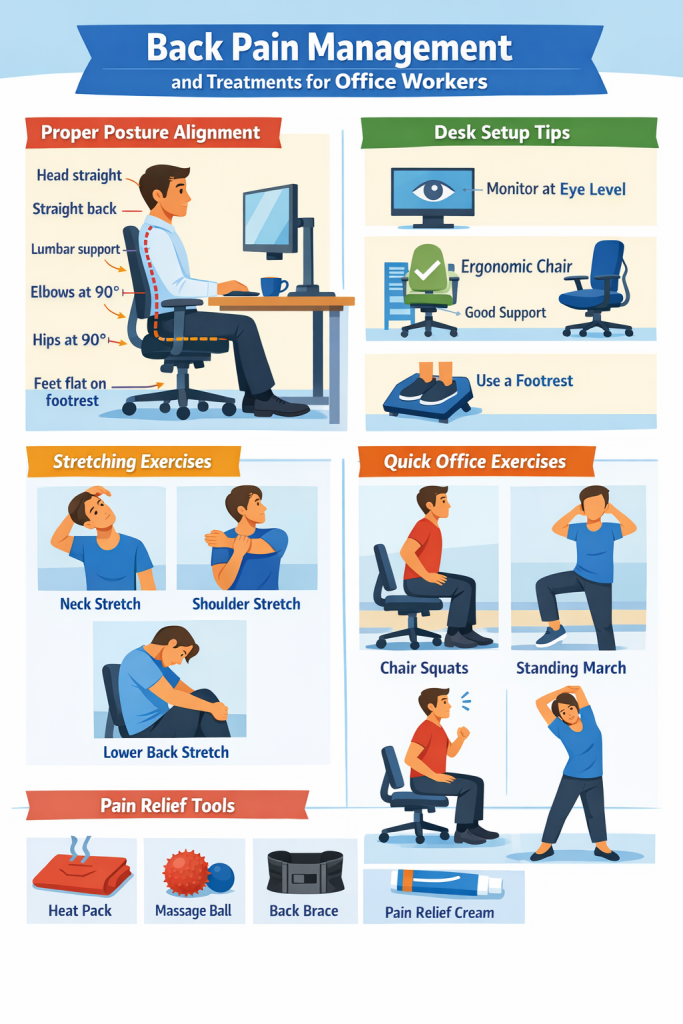
Back Pain Management and Treatments for Office Workers
Back pain has become one of the most common health complaints among modern professionals. Long hours spent sitting at a desk, poor posture, limited movement, and high stress levels all contribute to discomfort and reduced productivity. Back Pain Management and Treatments for Office Workers is no longer just a wellness topic—it is essential for maintaining long-term spinal health, performance, and quality of life.
This article explores the causes of office-related back pain, effective treatment options, and practical strategies office workers can use to reduce pain and prevent future problems. With the right approach, Back Pain Management and Treatments for Office Workers can be personalized, effective, and sustainable.
Why Office Workers Are Prone to Back Pain
Office workers are particularly vulnerable to back pain due to prolonged sitting and repetitive movements. Sitting for extended periods increases pressure on spinal discs and weakens core muscles that support the spine. Poor workstation ergonomics can further strain the neck, shoulders, and lower back.
Common contributors include:
- Slouched or forward-head posture
- Inadequate lumbar support
- Minimal movement throughout the day
- Stress-related muscle tension
Understanding these factors is the first step toward effective Back Pain Management and Treatments for Office Workers.
Common Types of Back Pain in Office Workers
Not all back pain is the same. Office workers may experience different types of pain depending on posture, activity level, and individual anatomy. Identifying the type of pain helps guide appropriate Back Pain Management and Treatments for Office Workers.
- Lower back pain: Often caused by prolonged sitting and weak core muscles
- Upper back and shoulder pain: Linked to forward-leaning posture and screen positioning
- Neck pain: Commonly associated with poor monitor height and mobile device use
- Sciatic pain: May occur when spinal discs or muscles irritate nearby nerves
Ergonomics: The Foundation of Back Pain Management
Proper workstation ergonomics play a critical role in Back Pain Management and Treatments for Office Workers. Small adjustments to desk setup can significantly reduce strain on the spine.
Key ergonomic recommendations include:
- Adjust chair height so feet rest flat on the floor
- Maintain neutral spine alignment with lumbar support
- Position the monitor at eye level
- Keep keyboard and mouse within easy reach
For more detailed ergonomic guidance, explore workplace posture tips at
Custom Chiropractor’s ergonomics resources.
Chiropractic Care for Office-Related Back Pain
Chiropractic care is a highly effective option for Back Pain Management and Treatments for Office Workers. Chiropractors focus on restoring spinal alignment, improving mobility, and reducing nerve irritation caused by prolonged sitting.
Benefits of chiropractic treatment include:
- Improved spinal alignment
- Reduced muscle tension
- Enhanced range of motion
- Drug-free pain relief
Many office workers find lasting relief through regular chiropractic adjustments combined with lifestyle guidance. Learn more about chiropractic solutions at
Custom Chiropractor’s chiropractic care page.
Exercise and Movement Strategies for Office Workers
Movement is essential for successful Back Pain Management and Treatments for Office Workers. Even short activity breaks during the workday can reduce stiffness and improve circulation.
Effective exercises include:
- Seated spinal rotations
- Standing hip flexor stretches
- Core-strengthening exercises
- Walking or light stretching every 30–60 minutes
Targeted exercise programs designed for desk workers can be especially beneficial. Consider reviewing back pain exercise guidance at
Custom Chiropractor’s back pain exercise library.
The Role of Stress and Mental Health
Stress plays a surprisingly large role in Back Pain Management and Treatments for Office Workers. High workloads and deadlines often lead to muscle tension, shallow breathing, and reduced pain tolerance.
Incorporating stress-reduction techniques such as deep breathing, mindfulness, and regular breaks can help alleviate tension-related back pain. Addressing mental and physical factors together leads to better long-term outcomes.
When to Seek Professional Help
While mild discomfort can often be managed with posture correction and movement, some symptoms require professional evaluation. Office workers should seek care if pain:
- Persists longer than a few weeks
- Radiates down the legs or arms
- Is accompanied by numbness or weakness
- Interferes with daily work or sleep
Early intervention improves recovery and prevents chronic issues. Professional guidance is a key component of comprehensive Back Pain Management and Treatments for Office Workers.
Long-Term Prevention Strategies
Sustainable Back Pain Management and Treatments for Office Workers focus on prevention as much as relief. Building healthy habits protects the spine and reduces recurrence.
- Maintain an active lifestyle outside work
- Strengthen core and postural muscles
- Schedule regular ergonomic assessments
- Consider ongoing chiropractic maintenance care
Educational articles and preventive care strategies are available at
Custom Chiropractor’s health and wellness blog.
Conclusion
Back pain does not have to be an inevitable part of office life. With the right combination of ergonomics, movement, chiropractic care, and stress management, office workers can regain comfort and productivity. Back Pain Management and Treatments for Office Workers is most effective when it is proactive, personalized, and focused on long-term spinal health.
By making small daily changes and seeking professional support when needed, office workers can protect their backs and enjoy healthier, pain-free workdays.