The Physical Effects of Anxiety on Muscles and Posture
Anxiety is often discussed in terms of mental and emotional health; however, its physical impact is just as significant. In fact, the physical effects of anxiety on muscles and posture can disrupt daily life, reduce mobility, and lead to chronic discomfort if left unaddressed. Understanding how anxiety manifests in the body is the first step toward relief and recovery.
Moreover, as stress levels rise, the body responds in ways that are deeply connected to the musculoskeletal system. This article explores the physical effects of anxiety on muscles and posture, how they develop, and what you can do to restore balance and well-being.
How Anxiety Affects the Body
To begin with, anxiety activates the body’s “fight or flight” response. This physiological reaction prepares the body to deal with perceived threats. As a result, muscles tense, breathing becomes shallow, and posture shifts unconsciously. Over time, these responses contribute significantly to the physical effects of anxiety on muscles and posture.
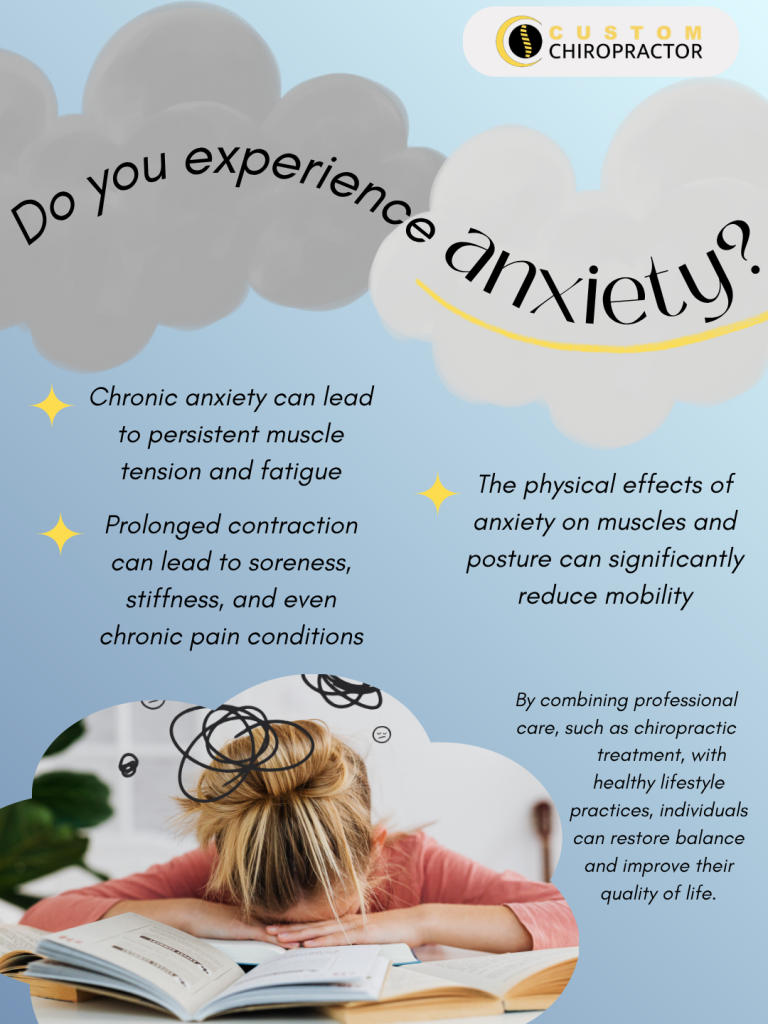
According to research from the American Psychological Association, chronic anxiety can lead to persistent muscle tension and fatigue. Consequently, the body remains in a semi-contracted state, even when no immediate threat exists.
Muscle Tension and Chronic Pain
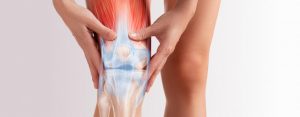
One of the most noticeable aspects of the physical effects of anxiety on muscles and posture is muscle tension. Typically, this tension occurs in the neck, shoulders, and back. Over time, prolonged contraction can lead to soreness, stiffness, and even chronic pain conditions.
Furthermore, individuals experiencing anxiety often clench their jaw, tighten their shoulders, or hunch forward without realizing it. This constant strain places excessive pressure on muscles and joints. For additional insights into musculoskeletal health, visit Custom Chiropractor’s guide to chiropractic care benefits.
Poor Posture and Spinal Misalignment
In addition to muscle tension, the physical effects of anxiety on muscles and posture often include poor posture. When anxiety takes hold, people tend to adopt defensive positions such as slouching or curling inward. This posture restricts breathing and further reinforces feelings of stress.
Over time, these habits may lead to spinal misalignment. As a result, individuals may experience reduced flexibility and increased discomfort. According to research published by the National Institutes of Health, poor posture is closely linked to both physical pain and emotional distress.
The Connection Between Breathing and Posture
Another critical component of the physical effects of anxiety on muscles and posture is altered breathing patterns. Anxiety often causes shallow, rapid breathing, which limits oxygen intake and increases muscle fatigue.
Additionally, improper breathing reinforces poor posture. When breathing becomes shallow, the chest tightens and the shoulders rise, creating a cycle of tension and discomfort. To address these issues, consider exploring posture correction techniques that support proper alignment and breathing.
Headaches and Jaw Pain
Notably, the physical effects of anxiety on muscles and posture can also manifest as headaches and jaw pain. Many individuals unknowingly grind their teeth or clench their jaw when stressed. This habit, known as bruxism, can lead to tension headaches and temporomandibular joint (TMJ) disorders.
As tension builds in the facial and neck muscles, pain may radiate throughout the head and upper body. Therefore, addressing anxiety-related muscle tension is essential for preventing recurring discomfort.
Reduced Mobility and Flexibility
Over time, the physical effects of anxiety on muscles and posture can significantly reduce mobility. Tight muscles restrict movement, making everyday activities more challenging. In severe cases, individuals may avoid physical activity altogether, which further exacerbates stiffness and weakness.
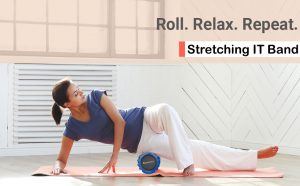
However, incorporating regular stretching and movement can help counteract these effects. Learn more about maintaining mobility through effective stretching techniques.
The Role of Chiropractic Care
Fortunately, there are effective ways to address the physical effects of anxiety on muscles and posture. Chiropractic care, for example, focuses on restoring proper alignment and relieving tension in the musculoskeletal system.
By correcting spinal misalignments, chiropractic adjustments can reduce muscle strain and improve posture. Additionally, regular care supports the body’s natural ability to heal and adapt to stress. For more information, visit Custom Chiropractor.
Practical Strategies for Relief
Beyond professional care, there are several practical strategies to minimize the physical effects of anxiety on muscles and posture. For instance, practicing mindfulness and relaxation techniques can help reduce muscle tension and improve awareness of posture.
In addition, regular exercise, proper ergonomics, and deep breathing exercises play a crucial role in maintaining physical health. These habits not only alleviate tension but also prevent the long-term consequences of chronic anxiety.
Conclusion
In summary, the physical effects of anxiety on muscles and posture extend far beyond temporary discomfort. From muscle tension and poor posture to chronic pain and reduced mobility, anxiety can significantly impact the body’s overall function.
Nevertheless, with the right approach, these effects can be managed effectively. By combining professional care, such as chiropractic treatment, with healthy lifestyle practices, individuals can restore balance and improve their quality of life.
Ultimately, recognizing the physical effects of anxiety on muscles and posture is the first step toward lasting relief. Taking action today can lead to a healthier, more aligned, and pain-free tomorrow.