How Massage Therapy Supports Joint Range of Motion
Maintaining healthy joints is essential for everyday comfort, athletic performance, and long-term mobility. Whether someone spends long hours sitting at a desk, participates in sports, or is recovering from an injury, joint stiffness can significantly impact quality of life. Fortunately, massage therapy offers a natural and effective way to improve flexibility and movement. Understanding how massage therapy supports joint range of motion can help individuals make informed decisions about their wellness routines and pain management strategies.
Massage therapy is widely recognized for reducing muscle tension and improving circulation, but its effects on the joints and connective tissues are equally important. When combined with chiropractic care and rehabilitative exercises, massage therapy can contribute to smoother movement, reduced discomfort, and better overall physical function.
Understanding Joint Range of Motion
Joint range of motion refers to how far a joint can comfortably move in different directions. Healthy range of motion allows the body to bend, twist, reach, and rotate without pain or stiffness. However, many factors can limit mobility, including:
- Muscle tightness
- Inflammation
- Poor posture
- Scar tissue
- Sports injuries
- Arthritis
- Sedentary lifestyles
As these issues develop, people often experience discomfort and reduced flexibility. This is where understanding how massage therapy supports joint range of motion becomes especially valuable.
How Massage Therapy Improves Flexibility
One of the primary reasons how massage therapy supports joint range of motion is such a popular topic is because massage directly targets the soft tissues surrounding the joints. Muscles, ligaments, and tendons all play a role in how freely joints can move.
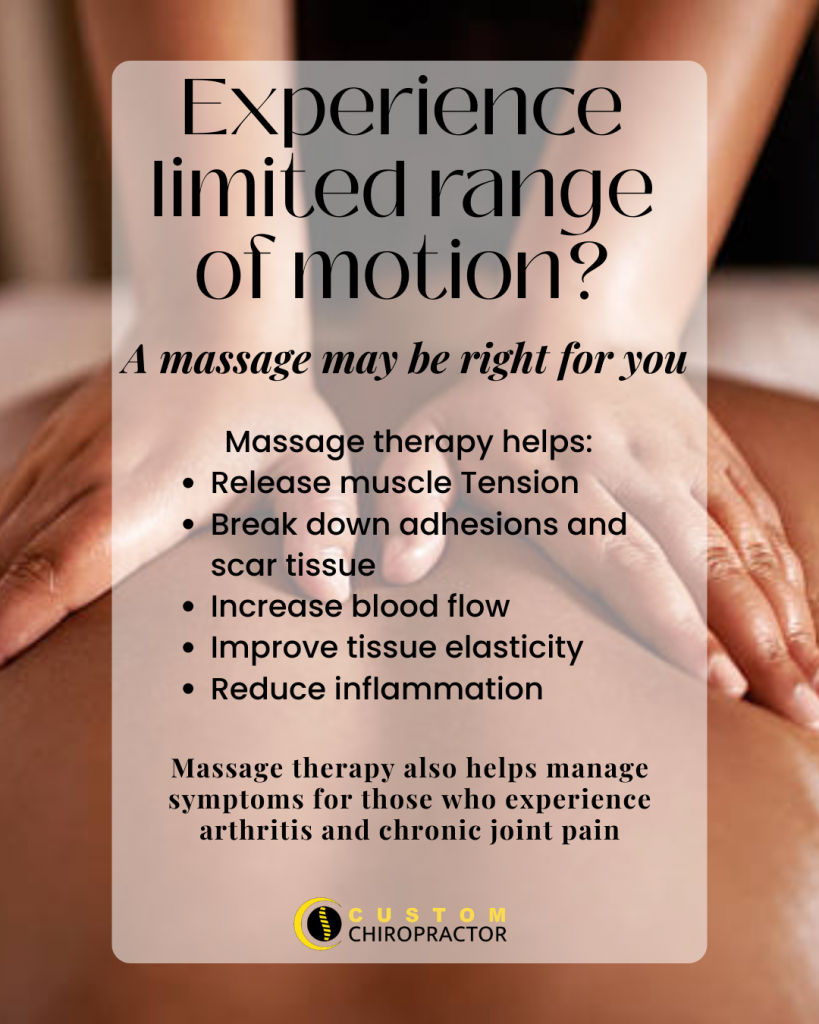
During a therapeutic massage session, a licensed massage therapist applies controlled pressure to tight or restricted tissues. This process helps:
- Release muscle tension
- Break down adhesions and scar tissue
- Increase blood flow
- Improve tissue elasticity
- Reduce inflammation
As a result, joints experience less resistance during movement. Patients often notice improved flexibility immediately after treatment, especially when massage is performed consistently.
According to research published by the National Library of Medicine, massage therapy can positively influence muscle recovery, flexibility, and pain reduction. These benefits directly contribute to improved joint mobility.
The Connection Between Muscles and Joint Mobility
Many people assume that stiff joints are solely caused by bone or cartilage problems. In reality, tight muscles are often the hidden cause of restricted movement. This is another important reason how massage therapy supports joint range of motion continues to gain attention in both wellness and rehabilitation communities.
When muscles become tight, they pull unevenly on the joints. This imbalance can limit movement patterns and increase strain on surrounding tissues. Massage therapy helps restore muscular balance by loosening shortened muscles and encouraging relaxation throughout the body.
For example, individuals with tight hip flexors may struggle with lower back pain and reduced hip mobility. Therapeutic massage can reduce tension in those muscles, allowing the hips and spine to move more naturally.
Massage Therapy and Injury Recovery
Injury rehabilitation is another area where how massage therapy supports joint range of motion becomes highly relevant. Following an injury, the body naturally develops inflammation and scar tissue as part of the healing process. Unfortunately, excessive scar tissue can restrict movement and create ongoing stiffness.
Massage therapy helps improve recovery by encouraging circulation and reducing soft tissue restrictions. Deep tissue massage and myofascial release techniques are commonly used to improve mobility after sports injuries, car accidents, or repetitive strain injuries.
At Custom Chiropractor’s pain and injury treatment center, massage therapy is frequently combined with chiropractic care and rehabilitation exercises to help patients recover more effectively and restore mobility.
How Massage Therapy Supports Joint Range of Motion for Athletes
Athletes rely heavily on flexibility and joint mobility to perform at their best. Limited range of motion can negatively impact strength, speed, coordination, and endurance. This is why professional athletes and active individuals often prioritize massage therapy as part of their recovery routines.
Understanding how massage therapy supports joint range of motion is especially important for preventing injuries in sports. Tight muscles increase the risk of strains, sprains, and overuse injuries. Massage therapy helps keep tissues flexible and joints moving properly.
Sports massage can also:
- Reduce delayed onset muscle soreness
- Improve circulation to fatigued muscles
- Enhance recovery time
- Support better athletic performance
Additionally, the Harvard Health Publishing resource on massage therapy highlights the role massage can play in reducing muscular tension and supporting injury recovery.
The Benefits of Combining Massage Therapy and Chiropractic Care
Another reason how massage therapy supports joint range of motion is such an effective wellness strategy is because massage therapy works exceptionally well alongside chiropractic adjustments.
Massage therapy helps loosen muscles and soft tissues before chiropractic treatment, making spinal and joint adjustments more effective. After adjustments, massage therapy can also help maintain mobility and reduce muscular tension that may otherwise pull joints out of alignment again.
Massage therapy services at Custom Chiropractor are designed to complement chiropractic care by improving flexibility, reducing inflammation, and supporting healthy movement patterns.
Patients who combine these therapies often report:
- Reduced stiffness
- Improved posture
- Enhanced mobility
- Faster recovery from injuries
- Long-term pain relief
Massage Therapy for Arthritis and Chronic Joint Pain
People living with arthritis or chronic joint discomfort can also benefit from learning how massage therapy supports joint range of motion. Arthritis often causes inflammation, swelling, and stiffness that make daily activities difficult.
While massage therapy does not cure arthritis, it can help manage symptoms naturally. Gentle massage techniques may reduce muscle guarding around painful joints and improve circulation to affected areas. This can result in greater comfort and easier movement.
Regular massage sessions may also help reduce stress hormones in the body, which can indirectly decrease tension and discomfort associated with chronic pain conditions.
Long-Term Mobility and Preventative Care
One of the greatest advantages of understanding how massage therapy supports joint range of motion is recognizing its role in preventative wellness. Many individuals wait until pain develops before seeking treatment. However, routine massage therapy can help maintain flexibility before major problems occur.
Preventative massage therapy may benefit:
- Office workers with postural tension
- Older adults experiencing age-related stiffness
- Athletes undergoing intense training
- Individuals recovering from surgery
- People with physically demanding jobs
Consistent care supports healthy movement patterns and reduces excessive strain on joints over time.
Choosing the Right Massage Therapy Provider
When exploring how massage therapy supports joint range of motion, it is important to choose experienced professionals who understand musculoskeletal health. A skilled massage therapist can tailor treatments to specific mobility restrictions and health goals.
The team at Custom Chiropractor includes licensed massage therapists and chiropractors who work together to create personalized treatment plans for improved mobility, pain relief, and long-term wellness.
In addition to massage therapy, integrated care plans may include stretching exercises, posture correction, spinal adjustments, and rehabilitation techniques for even better results.
Conclusion
Understanding how massage therapy supports joint range of motion reveals why this treatment continues to play an important role in modern wellness and rehabilitation. By reducing muscle tension, improving circulation, decreasing inflammation, and supporting healthy movement patterns, massage therapy can help individuals move more comfortably and confidently.
Whether someone is recovering from an injury, managing chronic stiffness, or simply trying to stay active, massage therapy offers a safe and effective solution for improving mobility. Combined with chiropractic care and preventative wellness strategies, massage therapy can support healthier joints and better physical function for years to come.