Child’s Pose: Benefits, Proper Technique, and Why This Yoga Pose Belongs in Your Daily Routine
Child’s Pose is one of the most recognizable yoga postures, and for good reason. Whether you are new to yoga or have years of experience, Child’s Pose offers a simple yet highly effective way to stretch the body, calm the mind, and improve overall mobility. While it is commonly used as a resting posture during yoga classes, its benefits extend far beyond relaxation.
From relieving back tension to improving flexibility and encouraging mindful breathing, Child’s Pose is an excellent addition to nearly any wellness routine. Furthermore, when combined with chiropractic care and corrective exercises, this foundational yoga pose may help support healthy posture, movement, and recovery from everyday physical stress.
If you’re looking for a gentle stretch that delivers meaningful physical and mental benefits, Child’s Pose deserves a place in your daily routine.
What Is Child’s Pose?
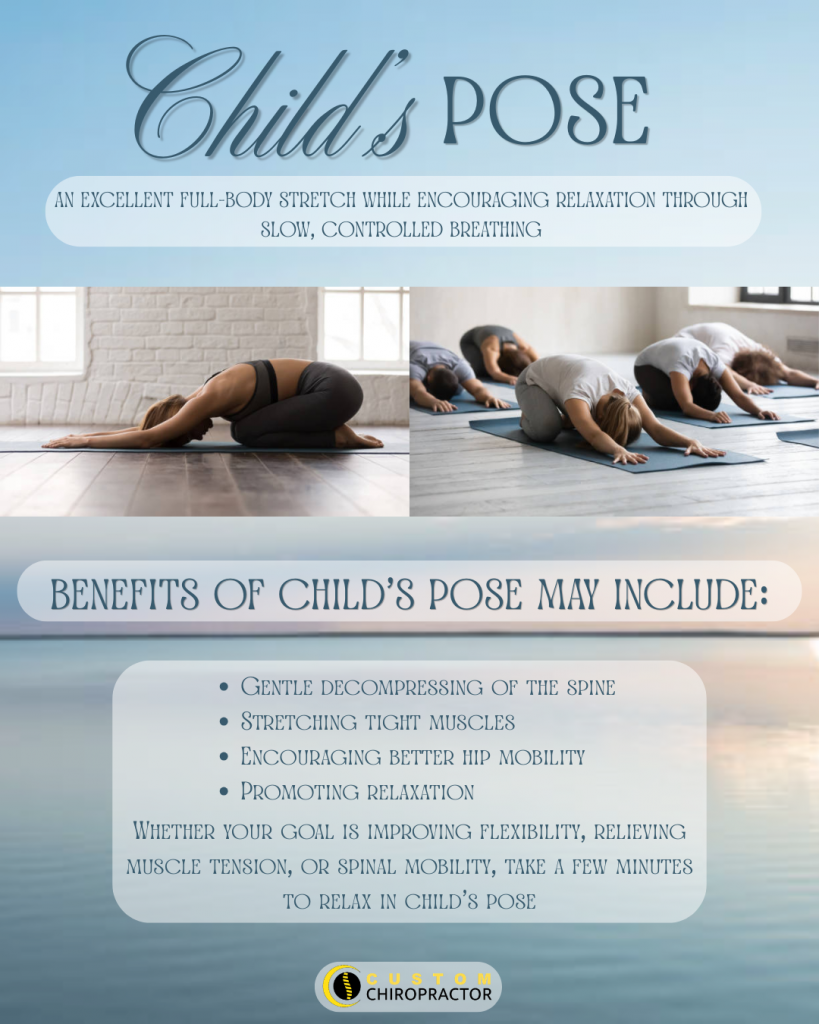
Child’s Pose, known traditionally as Balasana, is a gentle yoga posture performed by kneeling on the floor, sitting back onto your heels, and reaching your arms forward while lowering your chest toward the ground. The forehead rests comfortably on the mat while the spine naturally lengthens.
Although it appears simple, Child’s Pose provides an excellent full-body stretch while encouraging relaxation through slow, controlled breathing. It is often used between more demanding yoga poses to allow the body to recover without completely stopping movement.
How to Perform Child’s Pose Correctly
Performing Child’s Pose correctly helps maximize its benefits while minimizing unnecessary strain.
- Begin on your hands and knees.
- Bring your big toes together while allowing your knees to separate comfortably.
- Slowly sit your hips back toward your heels.
- Extend your arms forward with your palms resting on the floor.
- Lower your forehead toward the mat.
- Take slow, deep breaths while allowing your shoulders, neck, and lower back to relax.
- Hold the position for 30 seconds to several minutes depending on comfort.
If your hips do not comfortably reach your heels, placing a folded towel or yoga bolster between your thighs and calves can make Child’s Pose more accessible.
The Physical Benefits of Child’s Pose
1. Gently Decompresses the Spine
One of the biggest reasons people love Child’s Pose is its ability to gently lengthen the spine. Sitting for extended periods often compresses the lower back and contributes to stiffness. By reaching forward and allowing the hips to move backward, the spine experiences a gentle traction effect that many people find relieving.
If prolonged sitting contributes to discomfort, improving daily posture alongside stretching can make a significant difference. Custom Chiropractor offers practical advice on workplace posture in their article on Ergonomics That Actually Work.
2. Stretches Tight Muscles
Child’s Pose stretches multiple muscle groups simultaneously, including:
- Lower back muscles
- Latissimus dorsi (lats)
- Gluteal muscles
- Hip muscles
- Shoulders
- Ankles
As flexibility improves over time, many individuals notice easier movement during everyday activities.
3. Encourages Better Hip Mobility
Healthy hips play an essential role in walking, lifting, exercising, and maintaining proper posture. Child’s Pose gently opens the hips without placing excessive stress on the joints, making it appropriate for many beginners.
4. Promotes Relaxation
Unlike more physically demanding yoga positions, Child’s Pose encourages slow breathing and relaxation. Deep diaphragmatic breathing activates the body’s parasympathetic nervous system, often referred to as the “rest and digest” response.
This makes Child’s Pose an excellent option after a stressful workday or before bedtime.
How Child’s Pose Supports Better Posture
Modern lifestyles frequently involve prolonged computer work, driving, and smartphone use. These habits often contribute to rounded shoulders, forward head posture, and tight muscles throughout the spine.
While Child’s Pose alone cannot permanently correct poor posture, it can help reduce muscular tightness that contributes to postural imbalance.
Combining stretching with individualized chiropractic care and corrective exercises often provides a more comprehensive approach. Learn more about available treatment options at Custom Chiropractor’s services page.
Can Child’s Pose Help Back Pain?
Many people find temporary relief from mild muscle tension through Child’s Pose. Because the posture gently lengthens the muscles surrounding the spine, it may decrease stiffness caused by prolonged sitting or light physical activity.
However, persistent back pain should always be properly evaluated by a qualified healthcare professional before beginning any exercise program. While stretching can be helpful for muscular tightness, certain spinal conditions require individualized treatment.
During a comprehensive evaluation, providers at Custom Chiropractor assess posture, movement patterns, joint mobility, and muscle function to develop personalized treatment plans.
Child’s Pose and Stress Relief
One often overlooked benefit of Child’s Pose is its calming effect on the nervous system.
As breathing slows, heart rate often decreases while muscular tension gradually releases. Many yoga instructors encourage students to return to Child’s Pose whenever they feel overwhelmed during practice because it provides both physical and mental recovery.
Practicing this pose for just a few minutes each day may help promote relaxation and mindfulness.
Who Can Benefit from Child’s Pose?
Child’s Pose is appropriate for many individuals, including:
- Office workers
- Students
- Athletes
- Older adults
- Individuals beginning yoga
- People looking to improve flexibility
Nevertheless, modifications may be necessary for individuals with knee injuries, severe hip limitations, or recent surgery.
Child’s Pose Before Bed
Many people enjoy practicing Child’s Pose before going to sleep. Gentle stretching combined with slow breathing may help the body transition into a more relaxed state.
Custom Chiropractor also recommends incorporating stretching into your nighttime routine in their article, Can’t Sleep? Do These Stretches Before Bed, where Child’s Pose is highlighted as one of several beneficial bedtime stretches.
Scientific Evidence Supporting Yoga
Research continues to demonstrate that yoga may improve flexibility, balance, mobility, stress management, and overall quality of life. According to the National Center for Complementary and Integrative Health (NCCIH), yoga may help improve general wellness while reducing stress and supporting musculoskeletal health. Likewise, the Johns Hopkins Medicine wellness resources highlight yoga’s potential benefits for flexibility, strength, balance, and relaxation.
Combining Child’s Pose with Chiropractic Care
Although Child’s Pose is an excellent mobility exercise, it works best as part of a comprehensive movement program.
Chiropractic care focuses on improving joint mobility, reducing muscular restrictions, and restoring healthy movement patterns. When combined with exercises like Child’s Pose, patients often experience improved flexibility and greater comfort during daily activities.
If you’re experiencing recurring stiffness, poor posture, or movement limitations, scheduling an evaluation with the team at Custom Chiropractor can help determine which stretches, exercises, and treatments are most appropriate for your individual needs.
Final Thoughts on Child’s Pose
Child’s Pose remains one of the safest, simplest, and most beneficial yoga postures available. Whether your goal is improving flexibility, relieving muscle tension, supporting spinal mobility, or simply taking a few minutes to relax, Child’s Pose offers something for nearly everyone.
By practicing Child’s Pose consistently, maintaining healthy posture, staying active, and seeking professional care when necessary, you can support better movement and long-term musculoskeletal health. While Child’s Pose is not a substitute for individualized medical treatment, it serves as an excellent foundation for a healthier, more mobile lifestyle.