How Manual Therapy Supports Muscle Recovery and Injury Prevention
Whether you’re an athlete, fitness enthusiast, or someone recovering from everyday aches and pains, understanding How Manual Therapy Supports Muscle Recovery and Injury Prevention can help you stay active and healthy. Manual therapy is a hands-on treatment approach that targets muscles, joints, fascia, and soft tissues to reduce pain, restore movement, and improve overall physical function.
Moreover, incorporating manual therapy into your wellness routine can accelerate recovery after exercise while reducing the likelihood of future injuries. As a result, many healthcare professionals recommend manual therapy as part of a comprehensive rehabilitation and injury prevention strategy.
What Is Manual Therapy?
Before exploring How Manual Therapy Supports Muscle Recovery and Injury Prevention, it’s important to understand what manual therapy involves. Manual therapy refers to skilled, hands-on techniques performed by licensed healthcare providers such as chiropractors, physical therapists, and osteopathic physicians.
These techniques may include:
- Soft tissue mobilization
- Myofascial release
- Joint mobilization
- Trigger point therapy
- Muscle energy techniques
- Stretching and assisted range-of-motion exercises
Each technique is designed to restore proper movement, reduce muscle tension, and improve the body’s natural healing processes.
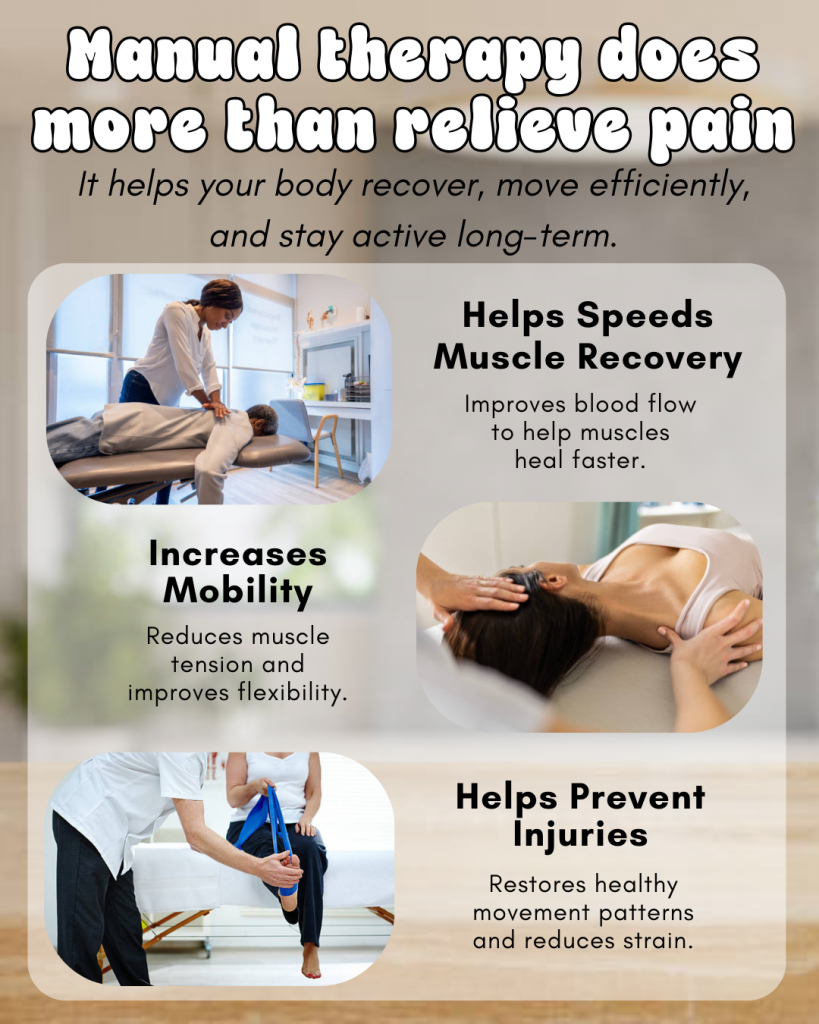
How Manual Therapy Supports Muscle Recovery and Injury Prevention Through Improved Blood Flow
One of the primary ways How Manual Therapy Supports Muscle Recovery and Injury Prevention becomes evident is through improved circulation. During physical activity, muscles experience microscopic tears that require oxygen and nutrients to heal properly.
Manual therapy stimulates blood flow to injured or overworked tissues. Consequently, increased circulation delivers oxygen-rich blood while helping remove metabolic waste products such as lactic acid. This process can significantly reduce post-workout soreness and accelerate tissue repair.
Furthermore, enhanced circulation contributes to healthier muscles and connective tissues, making them more resilient to future strain.
Reducing Muscle Tension and Pain
Another important reason How Manual Therapy Supports Muscle Recovery and Injury Prevention is its ability to relieve muscle tightness. Tight muscles often limit movement, create discomfort, and place excessive stress on nearby joints.
Through targeted pressure and mobilization techniques, manual therapy helps relax overactive muscles while restoring normal tissue elasticity. As a result, patients frequently experience:
- Reduced muscle stiffness
- Decreased pain
- Improved flexibility
- Greater comfort during movement
Because pain often alters movement patterns, reducing discomfort can also prevent compensatory movements that increase injury risk.
Enhancing Joint Mobility
Healthy joints are essential for efficient movement. However, repetitive stress, poor posture, and previous injuries can cause joints to become restricted.
How Manual Therapy Supports Muscle Recovery and Injury Prevention includes restoring joint mobility through gentle mobilization techniques. Improved joint movement allows muscles to function more efficiently while decreasing unnecessary strain on surrounding tissues.
Additionally, better mobility contributes to improved athletic performance and makes everyday activities easier and more comfortable.
Supporting Faster Recovery After Exercise
Exercise places healthy stress on muscles, which is necessary for growth and improved performance. Nevertheless, adequate recovery is equally important.
Understanding How Manual Therapy Supports Muscle Recovery and Injury Prevention means recognizing its role in shortening recovery time. By decreasing inflammation, improving circulation, and reducing muscle tightness, manual therapy allows many individuals to return to training sooner.
In addition, regular treatment may reduce delayed onset muscle soreness (DOMS), helping athletes maintain consistent training schedules without prolonged discomfort.
Improving Flexibility and Range of Motion
Flexibility plays a significant role in preventing injuries. Restricted muscles and fascia limit movement and increase stress on joints during physical activity.
How Manual Therapy Supports Muscle Recovery and Injury Prevention is demonstrated by its ability to improve tissue flexibility and restore healthy movement patterns.
As flexibility improves, individuals often notice:
- More efficient movement
- Better athletic performance
- Reduced risk of muscle strains
- Improved posture
- Greater comfort during daily activities
Therefore, manual therapy serves as both a recovery tool and a proactive injury prevention strategy.
Correcting Movement Dysfunction
Movement dysfunction develops when muscles, joints, or connective tissues fail to work together properly. Poor biomechanics frequently contribute to overuse injuries involving the knees, hips, shoulders, and lower back.
Fortunately, How Manual Therapy Supports Muscle Recovery and Injury Prevention also involves identifying and correcting dysfunctional movement patterns.
Healthcare providers often combine manual therapy with corrective exercises to restore proper muscle activation. Consequently, patients develop more efficient movement mechanics while decreasing repetitive stress on vulnerable structures.
Supporting Injury Rehabilitation
Recovering from an injury requires more than simply resting. Scar tissue formation, muscle weakness, and limited mobility can delay healing if left untreated.
How Manual Therapy Supports Muscle Recovery and Injury Prevention extends into rehabilitation by improving tissue mobility and restoring functional movement.
Manual therapy is commonly used during recovery from:
- Muscle strains
- Ligament sprains
- Tendon injuries
- Neck pain
- Back pain
- Sports-related injuries
Combined with therapeutic exercise, manual therapy can help patients regain strength while minimizing the likelihood of reinjury.
Reducing Stress on the Nervous System
Muscle recovery is influenced not only by physical health but also by nervous system function. Chronic tension can keep muscles in a guarded state, preventing complete relaxation.
Many patients report feeling more relaxed after treatment because manual therapy may reduce excessive muscle guarding and promote normal nervous system regulation.
As a result, the body can focus more efficiently on healing damaged tissues while restoring normal movement patterns.
Who Can Benefit from Manual Therapy?
Although athletes commonly seek treatment, many individuals benefit from learning How Manual Therapy Supports Muscle Recovery and Injury Prevention.
Suitable candidates include:
- Competitive athletes
- Weekend warriors
- Office workers with postural strain
- Individuals recovering from surgery
- Older adults seeking improved mobility
- People experiencing chronic muscle tension
Because treatment plans are personalized, manual therapy can address a wide variety of musculoskeletal conditions across different age groups.
Supporting Research
Growing research supports the effectiveness of manual therapy for pain reduction, improved mobility, and functional recovery. Clinical guidelines increasingly recommend manual therapy alongside exercise for managing many musculoskeletal disorders.
For additional evidence-based information, visit these trusted resources:
- American Physical Therapy Association
- National Center for Biotechnology Information (NCBI)
- Cochrane Library
Incorporating Manual Therapy Into Your Wellness Routine
Consistency often produces the best results. Rather than waiting until pain becomes severe, many individuals incorporate manual therapy into their preventive healthcare routine.
Regular treatment may help identify minor movement restrictions before they develop into significant injuries. Additionally, combining manual therapy with strength training, stretching, proper nutrition, hydration, and adequate sleep creates a comprehensive recovery strategy.
Ultimately, prevention is often more effective, and less costly, than treating chronic injuries after they occur.
Conclusion
How Manual Therapy Supports Muscle Recovery and Injury Prevention extends far beyond temporary pain relief. Through improved circulation, enhanced flexibility, better joint mobility, reduced muscle tension, and optimized movement patterns, manual therapy plays a valuable role in helping individuals recover faster while reducing future injury risk.
Whether you’re recovering from a recent injury, training for your next athletic event, or simply looking to move with greater comfort, manual therapy offers evidence-based benefits that support long-term musculoskeletal health. When combined with regular exercise, proper recovery habits, and guidance from a qualified healthcare professional, manual therapy can become an essential component of maintaining an active, healthy lifestyle.