Work-from-Home Pain Syndromes and Their Physical Therapy Solutions
The shift toward remote work has transformed the modern workplace, but it has also introduced a new wave of musculoskeletal problems. Today, millions of professionals spend long hours sitting at dining tables, couches, or makeshift home offices without proper ergonomic support. As a result, Work-from-Home Pain Syndromes and Their Physical Therapy Solutions have become increasingly important for anyone experiencing recurring discomfort.
Whether you’re dealing with neck stiffness, lower back pain, shoulder tension, or wrist discomfort, understanding Work-from-Home Pain Syndromes and Their Physical Therapy Solutions can help you reduce pain, improve posture, and prevent long-term injuries. Fortunately, combining evidence-based rehabilitation with chiropractic care, soft tissue therapy, and corrective exercises offers an effective path toward recovery.
If your symptoms continue despite adjusting your workspace, seeking professional care through Custom Chiropractor’s treatment services can help identify the root cause and develop a personalized recovery plan. Their integrated approach combines chiropractic care, massage therapy, rehabilitation exercises, and specialized soft tissue techniques for lasting relief. :contentReference[oaicite:0]{index=0}
Why Work-from-Home Pain Syndromes Are Becoming More Common
Remote work often eliminates the natural movement people once experienced throughout the workday. Instead of walking to meetings, commuting, or changing workstations, many individuals remain seated for several hours without interruption. Consequently, muscles become tight while joints gradually lose mobility.
Additionally, poor workstation ergonomics frequently contribute to:
- Forward head posture
- Rounded shoulders
- Lower back compression
- Hip flexor tightness
- Reduced spinal mobility
- Weak core muscles
According to the CDC’s ergonomic recommendations, maintaining proper workstation setup and taking regular movement breaks significantly reduces musculoskeletal strain during computer work.
Common Work-from-Home Pain Syndromes
1. Neck Pain and Forward Head Posture
One of the most common examples of Work-from-Home Pain Syndromes and Their Physical Therapy Solutions involves chronic neck pain. Looking downward at laptops or monitors places excessive stress on the cervical spine. Over time, this causes muscles to fatigue while joints become increasingly irritated.
Symptoms often include:
- Neck stiffness
- Frequent headaches
- Pain between the shoulder blades
- Reduced range of motion
- Muscle spasms
Fortunately, chiropractic adjustments combined with corrective exercises and soft tissue therapy can restore mobility while improving posture. At Custom Chiropractor, treatment plans are customized according to each patient’s condition and functional goals.
2. Lower Back Pain
Lower back discomfort is another hallmark of Work-from-Home Pain Syndromes and Their Physical Therapy Solutions. Sitting for prolonged periods increases pressure on spinal discs while weakening the muscles responsible for supporting the lumbar spine.
Without intervention, occasional soreness can gradually progress into chronic pain that limits daily activities.
Physical rehabilitation typically focuses on:
- Core strengthening
- Hip mobility exercises
- Lumbar stabilization
- Postural correction
- Movement retraining
These techniques not only reduce current symptoms but also decrease the likelihood of recurring injuries.
3. Shoulder and Upper Back Tension
Poor desk posture often forces the shoulders into a rounded position, creating constant tension across the upper back and chest muscles. As these muscles tighten, shoulder blades lose their normal movement, increasing stress throughout the neck and upper spine.
One of the most overlooked aspects of Work-from-Home Pain Syndromes and Their Physical Therapy Solutions is restoring balanced muscle function instead of merely treating pain. Manual therapy, myofascial release, massage therapy, and strengthening exercises work together to improve movement quality while reducing muscular compensation patterns.
Wrist and Hand Pain from Computer Use
Typing and mouse use for several hours each day may contribute to wrist pain, tendon irritation, and repetitive strain injuries. Many remote workers notice numbness, tingling, or weakness after long work sessions.
Early intervention is especially important because untreated symptoms may worsen over time. Treatment often includes mobility exercises, nerve gliding techniques, ergonomic modifications, and gradual strengthening to restore normal function.
Healthcare providers also recommend adjusting keyboard height, maintaining neutral wrist positioning, and taking brief stretching breaks every 30 to 60 minutes to minimize repetitive stress. Additional ergonomic guidance is available through the Occupational Safety and Health Administration (OSHA).
How Physical Therapy and Chiropractic Care Work Together
Many people assume they must choose between chiropractic care and physical rehabilitation. However, comprehensive treatment frequently combines both approaches to address pain while restoring movement.
This integrated strategy makes Work-from-Home Pain Syndromes and Their Physical Therapy Solutions particularly effective because treatment addresses both the symptoms and their underlying causes.
For example, chiropractic adjustments may improve spinal joint mobility, while rehabilitation exercises strengthen supporting muscles to maintain those improvements. Meanwhile, massage therapy and soft tissue treatments help reduce muscle tension that often contributes to recurring pain.
Custom Chiropractor incorporates individualized treatment plans that may include chiropractic adjustments, massage therapy, Active Release Technique (ART), Instrument Assisted Soft Tissue Mobilization (IASTM), cupping therapy, kinesiology taping, and corrective exercises depending on each patient’s condition.
Daily Prevention Strategies for Remote Workers
Although professional treatment can significantly reduce pain, prevention remains the best long-term strategy. Implementing healthy work habits every day can dramatically decrease the risk of developing chronic musculoskeletal problems. Therefore, incorporating these habits into your routine is one of the most effective Work-from-Home Pain Syndromes and Their Physical Therapy Solutions.
Consider the following recommendations to protect your spine and joints throughout the workday:
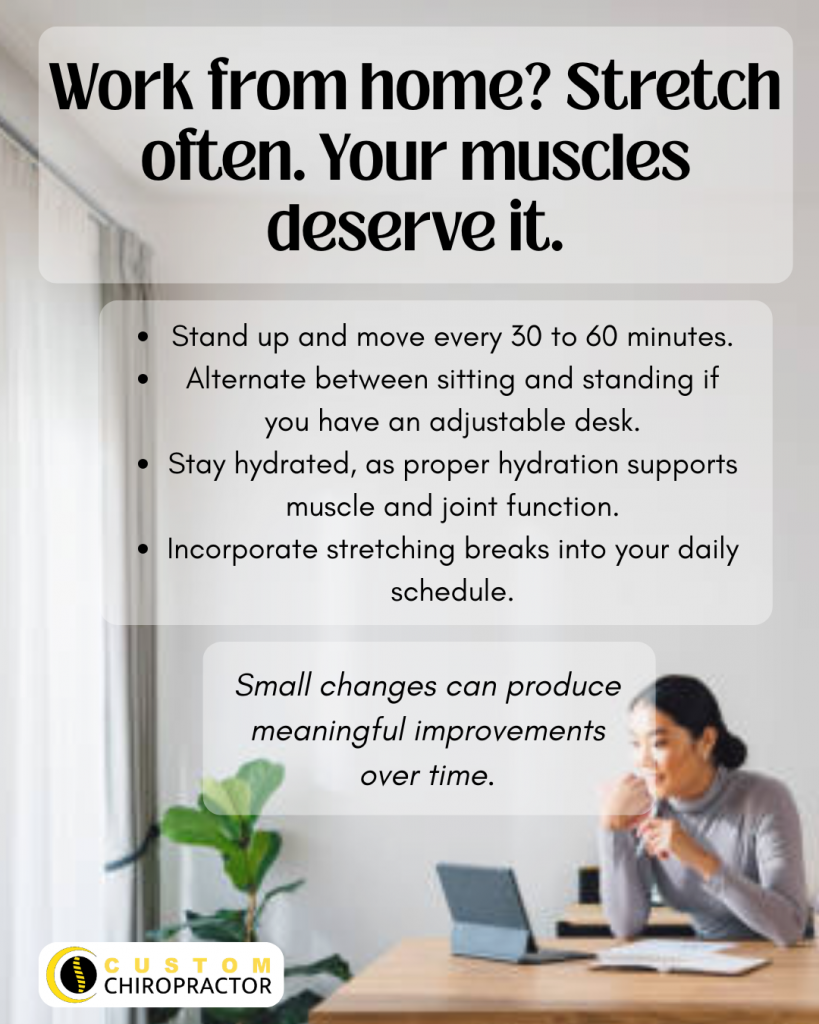
- Stand up and move every 30 to 60 minutes.
- Alternate between sitting and standing if you have an adjustable desk.
- Keep your monitor at eye level to avoid forward head posture.
- Position your keyboard and mouse so your elbows remain close to your body.
- Place both feet flat on the floor or on a footrest.
- Stay hydrated, as proper hydration supports muscle and joint function.
- Incorporate stretching breaks into your daily schedule.
Even small changes can produce meaningful improvements over time. Furthermore, consistent movement helps improve circulation, reduces muscle stiffness, and minimizes joint compression associated with prolonged sitting.
Simple Exercises That Support Recovery
Exercise plays a central role in Work-from-Home Pain Syndromes and Their Physical Therapy Solutions. While every individual has unique needs, several basic movements are commonly recommended to improve posture, flexibility, and strength.
Chin Tucks
This exercise strengthens the deep neck flexor muscles while helping correct forward head posture. Perform 10 repetitions several times throughout the day.
Scapular Retractions
Pull your shoulder blades together gently and hold for five seconds. This exercise activates the muscles that support healthy shoulder alignment and reduces upper back fatigue.
Cat-Cow Stretch
This gentle spinal mobility exercise improves flexibility throughout the neck, thoracic spine, and lower back while decreasing stiffness caused by prolonged sitting.
Hip Flexor Stretch
Tight hip flexors frequently contribute to lower back discomfort. Stretching these muscles daily helps restore pelvic alignment and reduces stress on the lumbar spine.
Core Stabilization Exercises
Exercises such as modified planks, bridges, and bird dogs strengthen the muscles that stabilize the spine. As a result, they improve posture and help prevent recurring episodes of lower back pain.
Before beginning any exercise program, consult a qualified healthcare professional if you have persistent pain, recent injuries, or underlying medical conditions.
Creating an Ergonomic Home Office
An ergonomic workstation is one of the most effective investments in preventing chronic pain. In fact, many cases requiring Work-from-Home Pain Syndromes and Their Physical Therapy Solutions stem from poor workstation design rather than underlying injury.
An ideal workstation should include:
- A supportive chair that maintains the natural curve of the lower back.
- A monitor positioned directly in front of you with the top at eye level.
- A keyboard positioned so elbows remain at approximately 90 degrees.
- A mouse placed close to the keyboard to reduce shoulder strain.
- Proper lighting that minimizes eye strain and awkward postures.
Additionally, using an external keyboard and monitor with a laptop can significantly improve posture and reduce unnecessary stress on the neck and shoulders.
When Should You Seek Professional Care?
Occasional soreness after a long workday is common. However, persistent pain should never be ignored. If discomfort lasts longer than a few days, becomes more intense, or begins interfering with work or daily activities, professional evaluation is recommended.
You should seek care if you experience:
- Persistent neck or back pain.
- Numbness or tingling in the arms or legs.
- Frequent headaches associated with neck tension.
- Loss of strength or mobility.
- Pain that disrupts sleep or daily function.
A comprehensive examination can determine the underlying cause of your symptoms and guide an individualized treatment plan. At Custom Chiropractor, providers evaluate posture, movement patterns, joint mobility, muscle function, and lifestyle factors to develop targeted treatment strategies that promote long-term recovery.
The Benefits of an Individualized Treatment Plan
No two patients experience pain in exactly the same way. Consequently, effective Work-from-Home Pain Syndromes and Their Physical Therapy Solutions should be tailored to each individual’s needs rather than relying on a one-size-fits-all approach.
An individualized plan may combine chiropractic adjustments, corrective exercise, manual therapy, soft tissue mobilization, ergonomic education, and home exercise programs. This comprehensive approach addresses both immediate discomfort and the underlying biomechanical issues that contribute to recurring pain.
Research also supports exercise-based rehabilitation for reducing chronic musculoskeletal pain and improving long-term function. The American Physical Therapy Association (APTA) emphasizes that movement-based interventions can improve mobility, decrease pain, and enhance overall quality of life.
Conclusion
Remote work offers flexibility and convenience, but it also presents unique physical challenges. Fortunately, understanding Work-from-Home Pain Syndromes and Their Physical Therapy Solutions empowers remote workers to recognize symptoms early and take proactive steps toward recovery.
By combining ergonomic improvements, regular movement, strengthening exercises, chiropractic care, and physical rehabilitation, many individuals can significantly reduce pain while preventing future injuries. The earlier these issues are addressed, the greater the likelihood of achieving lasting relief and maintaining long-term spinal health.
If you’re experiencing ongoing discomfort while working from home, don’t wait for the pain to become chronic. Schedule a consultation with the team at Custom Chiropractor to receive a comprehensive evaluation and personalized treatment plan designed to help you move comfortably, work efficiently, and live pain-free.