Managing Plantar Fasciitis Without Surgery
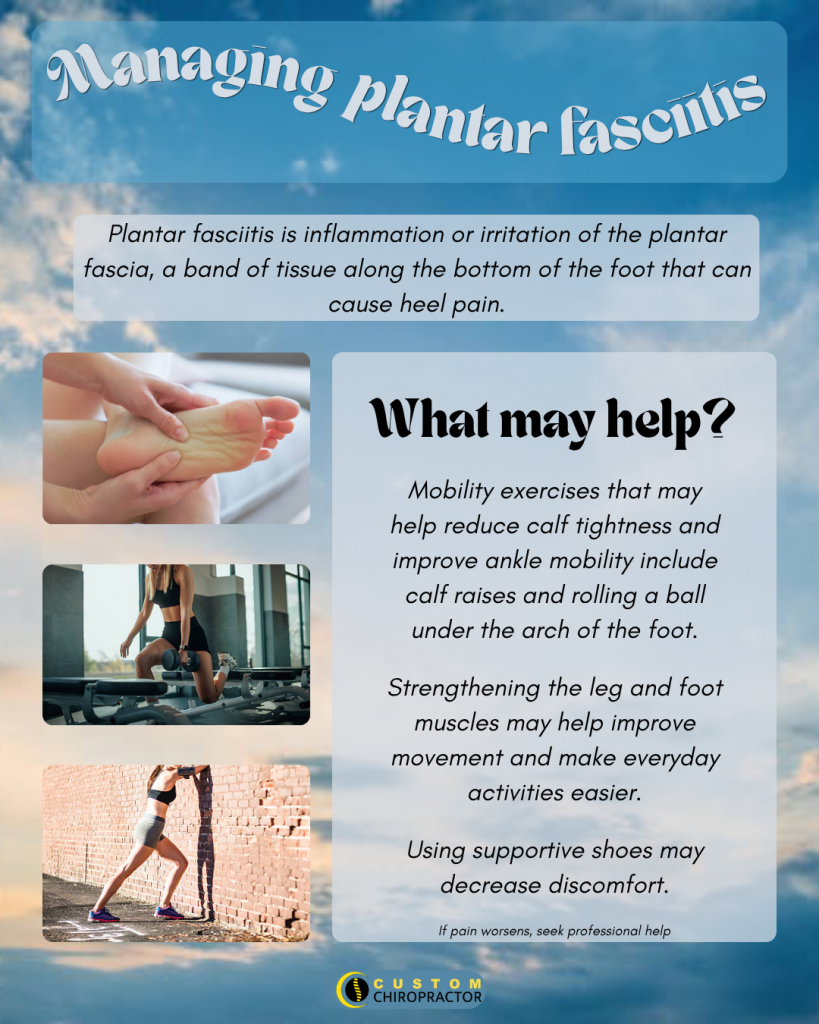
Plantar fasciitis can make simple activities such as walking, exercising, or standing for long periods surprisingly uncomfortable. The good news is that many people can improve their symptoms with conservative care. In fact, the American Academy of Orthopaedic Surgeons notes that about 90% of people greatly improve within two to three months of initial treatment.
For that reason, Managing Plantar Fasciitis Without Surgery often begins with understanding what is contributing to heel pain and then combining appropriate stretching, strengthening, footwear changes, activity modification, and professional care. This approach can help address the factors affecting the foot while allowing the body time to recover.
What Is Plantar Fasciitis?
Plantar fasciitis involves the plantar fascia, a strong band of connective tissue that runs along the bottom of the foot and helps support the arch. Pain is commonly felt near the heel and may be particularly noticeable with the first steps after getting out of bed or after sitting for an extended period.
However, heel pain does not always have the same cause. Foot mechanics, activity levels, footwear, muscle tightness, training changes, and previous injuries can all contribute to discomfort. Therefore, identifying the underlying factors is an important part of Managing Plantar Fasciitis Without Surgery.
For additional information about the structures and potential causes involved in foot discomfort, see What Causes Foot Pain? from Custom Chiropractor.
Why Consider Conservative Treatment?
Although persistent heel pain can be frustrating, surgery is generally not the first option for plantar fasciitis. Instead, conservative treatment focuses on reducing aggravating factors and gradually improving flexibility, strength, mobility, and tolerance to activity.
Consequently, Managing Plantar Fasciitis Without Surgery can involve several strategies rather than relying on one treatment. A consistent program may include stretching, strengthening exercises, supportive footwear, temporary activity modification, and hands-on treatment when appropriate.
Stretching and Mobility Exercises
One of the most accessible ways to begin Managing Plantar Fasciitis Without Surgery is through regular stretching. Tight calf muscles and limited ankle mobility can affect how forces are distributed through the foot.
The AAOS recommends stretches such as wall calf stretches, step stretches, and towel stretches for the calf and foot. Their conditioning program also includes exercises such as rolling a ball underneath the arch of the foot.
Consistency matters. Rather than performing an aggressive stretching session occasionally, gentle exercises performed regularly may be easier to incorporate into a long-term routine. If an exercise significantly increases your pain, stop and discuss it with an appropriate healthcare professional.
Strengthen the Feet and Lower Legs
Stretching is only one part of Managing Plantar Fasciitis Without Surgery. Strengthening the muscles of the feet and lower legs can also support movement and improve how the foot handles everyday loads.
A rehabilitation professional can help determine which exercises are appropriate for your particular situation. Depending on your symptoms and physical examination, a program may incorporate calf strengthening, foot exercises, balance work, and progressive loading.
Importantly, strengthening should progress gradually. Doing too much too soon can aggravate heel pain, particularly when symptoms began after a sudden increase in running, walking, jumping, or another activity.
Evaluate Your Shoes and Activity
Footwear can influence how much stress your feet experience throughout the day. Shoes that are worn out, uncomfortable, or inappropriate for a particular activity may make symptoms more difficult to manage.
Likewise, suddenly changing your training routine can increase the load placed on the plantar fascia. Therefore, temporarily reducing activities that provoke pain while maintaining comfortable movement can be a useful part of Managing Plantar Fasciitis Without Surgery.
Custom Chiropractor also discusses footwear and foot function in its article What Are Barefoot Shoes?. The article notes that people with plantar fasciitis should be cautious about rapidly transitioning to minimalist footwear because reduced cushioning may increase stress on the feet.
Hands-On Treatment May Be Helpful
When stretching and exercise alone are not providing enough relief, professional hands-on care may be considered. Depending on the individual’s evaluation, treatment can focus on areas such as the foot, ankle, calf, and surrounding soft tissues.
For example, Custom Chiropractor describes the use of Active Release Technique as a non-invasive soft-tissue approach that may be used for musculoskeletal conditions including plantar fasciitis.
Another technique discussed by the practice is Instrument Assisted Soft Tissue Mobilization (IASTM). Custom Chiropractor describes IASTM as a soft-tissue technique targeting muscles, tendons, ligaments, and fascia.
These approaches should be selected based on an individual’s symptoms and examination rather than used as a one-size-fits-all solution.
Consider a Comprehensive Approach
One of the biggest advantages of Managing Plantar Fasciitis Without Surgery is the ability to combine several conservative strategies. For example, someone might benefit from a combination of appropriate footwear, calf stretching, foot strengthening, temporary activity modification, and professional guidance.
Additionally, evaluating walking mechanics and other contributing factors may help identify why symptoms developed in the first place. Custom Chiropractor explains that foot pain can involve muscles, tendons, ligaments, fascia, joints, and bones, which is why an individualized evaluation can be useful.
When Should You Seek Professional Help?
If heel pain is persistent, worsening, interfering with normal activities, or accompanied by significant swelling, numbness, weakness, trauma, or other concerning symptoms, seek an appropriate medical evaluation. Not every case of heel pain is plantar fasciitis, so an accurate diagnosis is important.
Furthermore, if home exercises consistently aggravate your symptoms or you are unsure which activities are appropriate, a qualified healthcare professional can help create a progressive plan based on your needs.
Can Plantar Fasciitis Really Improve Without Surgery?
For many people, yes. Conservative care is commonly used before surgical intervention, and the AAOS reports that approximately 90% of people greatly improve within two to three months of initial treatment.
Ultimately, Managing Plantar Fasciitis Without Surgery is about giving the foot the right combination of support, movement, recovery, and progressive strengthening. Patience is important because improvements may occur gradually rather than overnight.
Final Thoughts
Managing Plantar Fasciitis Without Surgery can be a practical goal for many people experiencing heel pain. Stretching, strengthening, appropriate footwear, sensible activity modifications, and individualized professional care may all have a role in recovery.
Most importantly, avoid treating every case of heel pain exactly the same way. An individualized assessment can help determine what is contributing to your symptoms and which strategies make the most sense. If you are dealing with ongoing foot or heel pain, Custom Chiropractor offers evaluation and conservative treatment options for musculoskeletal conditions.
This article is for educational purposes only and is not a substitute for individualized medical advice, diagnosis, or treatment.